
France and Italy Itinerary Ideas for 1, 2, or 3 Week Trips
I’ve been traveling through France and Italy since I was a little kid, and they’re still two of my favorite places to revisit. My first trip had me feeding pigeons in Venice and pretending to like gelato (I’ve since gotten better at both). Since then, I’ve returned many times, and over the years, I’ve learned what makes for a fun, efficient, and not-too-rushed first-time itinerary through these iconic countries.
This guide will help you figure out how many cities to visit, how long to stay in each place, and how to put together a trip that won’t leave you exhausted by day four. I’ve also included sample itineraries that cover 7, 10, 14, and even 18-night trips, using the pacing I’ve found to be the sweet spot for most travelers.
If you haven’t seen them yet, you’ll also want to check out:
The advice in this article is designed for people who want to see the most famous sights in France and Italy while still having time to enjoy the local culture — not just rush from city to city. I’m a big believer that 3 nights in each major city is ideal, with occasional day trips to places like Pisa, Cinque Terre, or the Amalfi Coast.
This article was most recently updated in August, 2025.
How Long Should You Stay in Each City?
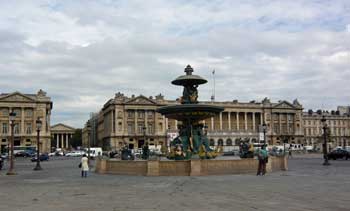 Trying to see all of Italy and France in two weeks? That can easily turn into a blur of trains, hotel check-ins, and hurried sightseeing. In cities like Rome or Paris, even booking two nights leaves you with just one full day to explore—and that rarely cuts it.
Most travel experts, including myself, recommend minimum 3 nights per major city — ideally even more if you want to soak in the food, culture, and pace. This helps avoid burnout, lets you feel grounded, and gives you space to pivot if plans change.
>>>Going just to Italy?: Here are the best first-time Italy itineraries for 3 days to two weeks
Best Airports to Start and End Your Trip
If you’re planning to visit both France and Italy on the same trip, your best bet is to fly into one country and out of the other — known as an “open-jaw” ticket. These fares are surprisingly common and often cost the same as round-trip tickets into and out of a single airport.
The most popular airports for this kind of trip are Paris (CDG) and Rome (FCO). Both have nonstop flights to major cities around the world and are ideal starting points for first-time visitors.
The first thing to try is this:
- (your city) to Paris one-way
- Rome to (your city) one-way
Compare that to this:
- (your city) to Paris round-trip
- (your city) to Rome round-trip
Open-jaw tickets are especially useful if you only have 7 to 10 days — they save you from doubling back and give you more time to enjoy each destination. If you’re flying from North America, you’ll often find the best deals into Paris, but always check both directions before booking.
Getting Around Once You’re in Europe
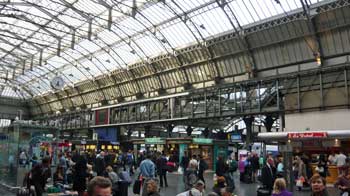 The good news is that getting between cities in France and Italy is easy, fast, and surprisingly affordable — especially if you book in advance. High-speed trains are usually the best way to go, offering a comfortable, scenic ride right into the heart of each city. Unlike airports, train stations are central, so you avoid long transfers and security lines.
If you’re going from Paris to Italy, the overnight train from Paris to Venice used to be a favorite, but it’s no longer running. These days, most travelers take a quick flight — often cheaper than the train — or make a stop in Switzerland or the French Riviera to break up the journey.
Once you’re in Italy, trains are almost always the best option. Routes like Rome to Florence or Florence to Venice are high-speed, with frequent departures and short travel times. Booking early on Trenitalia or ItaloTreno can get you excellent fares — sometimes as low as €20 for first class.
There’s really no need to rent a car for a trip like this unless you’re venturing deep into the countryside. For city-to-city travel, stick with trains — they’re faster, easier, and far less stressful.
Best Cities in France for First-Time Visitors
Paris (minimum 3 nights but even that is rushing it)
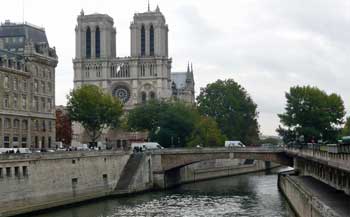 Paris is the perfect gateway to a France and Italy trip, and it easily deserves at least 3 nights — honestly, even that feels rushed. I’ve been to Paris many times over the years, and I still discover something new each visit. The city is endlessly walkable, full of hidden cafés, elegant parks, and world-class museums that never disappoint.
My personal favorites include an evening Seine river cruise (timing it for sunset feels magical), wandering through the narrow streets of Le Marais, and spending a lazy morning in a neighborhood café with nothing but a croissant and a bit of people-watching. The Eiffel Tower is iconic, of course, but I think the real magic of Paris comes from the smaller moments — finding your own favorite corner of the city.
If you plan on seeing several of the major sights, the Paris Pass is worth looking into. It includes entry to the Louvre, Musée d’Orsay, Arc de Triomphe, and even a Seine cruise, often saving you both money and time in ticket lines. I’ve used it myself and found that it’s a stress-free way to hit the highlights without constantly pulling out your wallet.
For first-timers, I recommend spending 3 or 4 nights in Paris before flying or taking a train south toward Italy. This gives you enough time to see the big landmarks without missing the slower, more romantic side of the city.
Provence region (optional 2 or 3 nights)
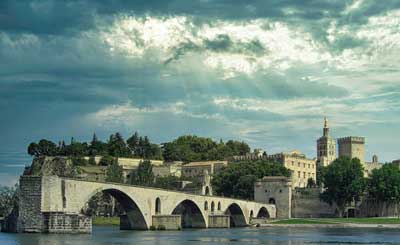 If you’re heading from Paris to the south of France, the most efficient route is typically to go straight to Nice and the French Riviera. But if beach towns aren’t your thing — or if you’re traveling from November through March, when the coast is quiet — the Provence region offers a completely different and equally memorable detour.
This area is where Van Gogh lived and painted, and it’s home to the Papal Palace in Avignon, where seven popes resided in the 1300s. Arles is the historic heart of the region and a good base for exploring, though Avignon might be even better for first-time visitors — it’s charming, compact, and very tourist-friendly.
From Avignon, you can explore the Côtes du Rhône wine road, a scenic trail linking hilltop villages, vineyards, and wineries. Provence also has a distinct cuisine — lighter and more Mediterranean — and even by French standards, the food is excellent.
This isn’t necessarily essential on your first trip unless you have a longer itinerary or specific interest in food, wine, or rural France, but it’s a beautiful and rewarding region to explore if time allows.
Paris to Avignon by train: About 3.5 hours
Avignon to Nice by train: About 3 hours
Nice, France (minimum 2 nights)
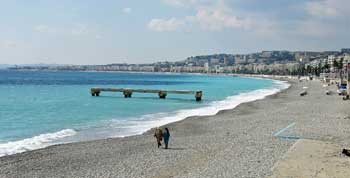 NiceNice is the ideal base for exploring the French Riviera, and it works in almost any season. While it’s best known as a summer destination, Nice stays active year-round, with locals out enjoying the seafront promenade even in the cooler months.
First-time visitors often underestimate how different this region feels compared to Paris. The Mediterranean vibe is strong — slower pace, brighter colors, and a coastline dotted with glamorous spots like Monaco, Cannes, and Èze, all of which are easy day trips by train or bus.
Nice itself has a charming old town, great views from Castle Hill, and some solid museums if the weather turns. I’ve stayed there in both winter and spring, and the combination of scenery and ease of access makes it one of the best intro stops in France. And since it has an international airport, you can often fly home from Nice rather than backtrack to Paris — a major plus.
Avignon to Nice by train: About 3 hours
Nice to Rome by air: About 1.5 hours (direct flights are common)
Best Cities in Italy for First-Time Visitors
Milan (1 night or just skip it)
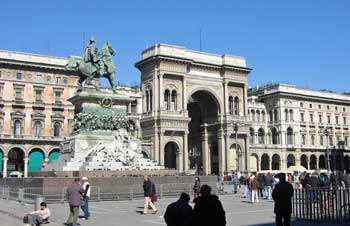 Milan might be Italy’s fashion capital and a major business hub, but for most first-time visitors, it’s not a must-see. If you’re flying into Milan, it’s worth spending a night to visit the magnificent Duomo di Milano and take a stroll through the upscale Galleria Vittorio Emanuele II. If you’re into art, you can try to snag tickets for The Last Supper, but those tend to sell out months in advance.
Personally, I’ve always found Milan a bit cold and formal compared to the rest of Italy. It’s very modern and efficient, which might be refreshing after Paris, but it lacks the charm and walkable beauty of cities like Rome or Florence. That said, if your flight lands here or departs from here, a short stay can make sense.
Nice to Milan by train: About 5 hours
Milan to Florence by train: About 1 hour 55 minutes
Venice (1 night minimum, 2 nights maximum)
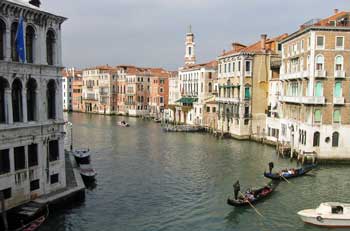 Venice is one of the most unique and beautiful cities in the world — and also one of the most touristy. Everyone should see it at least once, and even though it’s often crowded and expensive, the experience of wandering through its maze of canals and bridges is worth it. Just don’t overstay. The novelty fades quickly, especially when you realize how limited the dining options are near the major sights.
If you arrive in the afternoon, spend your first evening wandering, soaking in the twilight views, and maybe taking a sunset vaporetto ride down the Grand Canal. Then wake up early to explore St. Mark’s Basilica, Doge’s Palace, and the Rialto Bridge before the cruise ship crowds arrive.
From experience, I’ve found that 1 or 2 nights is ideal. That gives you plenty of time to see the best of Venice without getting overwhelmed — or overcharged. And if you’re visiting in summer, bring patience: the narrow alleys and packed squares can feel claustrophobic by midday.
Florence to Venice by train: About 2 hours
Venice to Rome by train: About 3 hours 45 minutes
Florence (2 nights minimum, plus side trips)
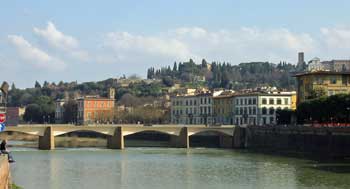 Florence is the heart of Tuscany and the birthplace of the Renaissance — and for many travelers, it ends up being their favorite stop in Italy. It’s compact, beautiful, and packed with world-class art and architecture, yet it also feels more relaxed than Rome or Venice. Two nights is the minimum, but if you’re planning side trips (which you absolutely should), it’s worth staying longer.
Climbing to the top of the Duomo is a highlight, as is seeing Michelangelo’s David at the Accademia. But what makes Florence even better is that it’s the perfect base for exploring Tuscany. A half-day to Pisa, a full day in the Cinque Terre, or a countryside wine tour through Chianti are all easy from here. You can even zip down to Rome in under 2 hours if needed.
For hotels, staying near the train station (Santa Maria Novella) is ideal for easy arrivals and day trips, while areas closer to the Duomo or Ponte Vecchio put you right in the center of the action.
Venice to Florence by train: About 2 hours
Florence to Rome by train: About 1.5 hours
Pisa (a few hours on a day trip at most)
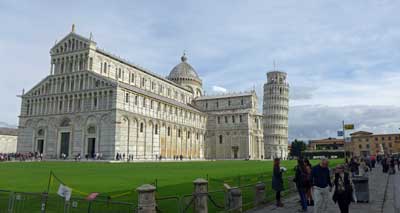 Let’s be honest — you come to Pisa for the Leaning Tower, and there’s nothing wrong with that. The tower itself is iconic and surprisingly impressive in person, especially when you realize it’s just one piece of a gorgeous complex that includes a cathedral and baptistery all on the same square.
Fortunately, Pisa is an easy and worthwhile day trip from Florence, taking just about an hour by train. You can walk from the train station to the tower in 20 minutes, or grab a quick taxi. Plan on a few hours total unless you want to climb the tower (you’ll need advance tickets), and then head back to Florence in time for aperitivo.
The rest of Pisa is a typical small Tuscan city with some charm, but most visitors don’t feel the need to stay overnight. That said, if you’re collecting classic photo ops on your trip, the Leaning Tower is a must.
Florence to Pisa by train: About 1 hour
Cinque Terre (1 night, optional)
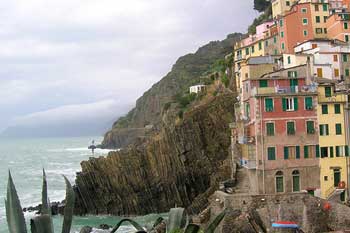 The Cinque Terre — a string of five cliffside villages along Italy’s Ligurian coast — has gone from hidden gem to international favorite, and it’s easy to see why. With pastel-colored buildings clinging to rocky hillsides, turquoise water below, and scenic hiking trails connecting the towns, it’s one of the most visually striking places in all of Europe.
That said, it’s not for everyone, especially if you’re short on time or visiting outside the warmer months. In cooler seasons, many restaurants and small hotels close, and the towns can feel a bit too quiet. In summer, they can be packed to the point of frustration. But in April, May, or September? Pure magic.
You can visit on a day trip from Florence or even Pisa if you get an early start, but staying one night lets you enjoy the villages after the day-trippers have left. The town of Monterosso has the best beaches, Vernazza is the most photogenic, and Riomaggiore is a common base for budget travelers.
Florence to La Spezia (gateway to Cinque Terre): About 2.5 hours by train
Rome (minimum 3 nights)
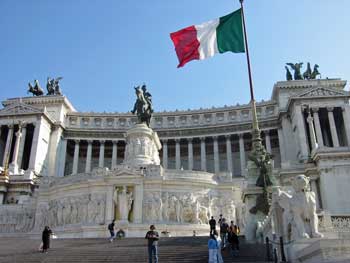 Rome is overwhelming in all the best ways. It’s packed with history, buzzing with life, and constantly serving up postcard views at every turn. The Eternal City is a must for first-timers, and three nights is the sweet spot to soak in the highlights without feeling rushed.
The main attractions are clustered fairly close together, so you can cover a lot on foot. One full day is enough to explore the Colosseum, Roman Forum, and nearby sites like the Pantheon and Trevi Fountain. Another full day can be devoted to the Vatican Museums, St. Peter’s Basilica, and maybe a guided walking tour or open-top bus ride to tie it all together.
My advice: Stay in or near the Centro Storico, or slightly east in the Monti neighborhood if you prefer a quieter local feel. Monti is still walkable to the Colosseum but offers a more authentic vibe with better restaurants and cafés.
Rome can be chaotic, but that’s part of its charm. After many visits, I still find new corners and surprising moments every time I go. The key is not to overschedule — leave time to wander, grab gelato, and watch the city unfold.
Florence to Rome by train: About 1.5 hours
Rome to Paris by air: About 2 hours
Naples/Pompeii/Sorrento/Amalfi Coast (optional up to 4 nights)
The “big 3” in Italy are Rome, Florence, and Venice, and if you have time for only 3 cities those are the obvious ones to choose. But if you want to dig deeper into Italy and you have enough time, your next best choice will be to base yourself in Sorrento and use it to explore Naples, the ruins of Pompeii, the Amalfi Coast, and the island of Capri.
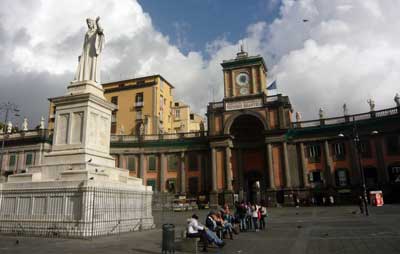 Naples has a reputation — some deserved, some exaggerated — but it’s definitely a city that leaves an impression. It’s fast-paced, gritty, and chaotic, yet packed with history, character, and what many call the best pizza in the world. The city’s historic center is a UNESCO World Heritage site, filled with narrow alleys, bustling markets, and centuries-old churches.
That said, Naples isn’t for everyone. The lack of green spaces, constant traffic, and overall energy can be overwhelming, especially if you’re not staying long. For most first-time visitors, it works best as a day trip to explore the historic center and grab an authentic pizza lunch before heading back to a more relaxing base.
If you’re planning to visit Pompeii or the Amalfi Coast, staying in Sorrento is usually a smarter and more enjoyable choice.
Rome to Naples by train: About 1 hour
Naples to Sorrento by local train: About 1 hour
Stay in Sorrento
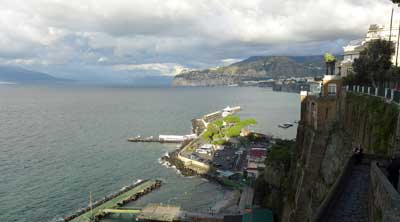 Sorrento is the perfect base for exploring this entire region. It’s a charming and relaxed town perched on cliffs overlooking the Bay of Naples, with a historic center filled with narrow lanes, outdoor cafés, and shops selling local limoncello. Compared to Naples, Sorrento feels calm, clean, and welcoming — making it a far better place to stay, especially for first-time visitors.
From Sorrento, it’s easy to take day trips to Pompeii, Capri, and the Amalfi Coast. Ferries and buses run regularly, and for some routes, splitting a taxi fare with fellow travelers can be surprisingly affordable and scenic.
I’ve always found Sorrento to be one of Italy’s most pleasant small cities. It has the charm of a coastal village but with enough restaurants and conveniences to feel comfortable for a multi-night stay. Plus, the views from the cliffs and marinas are reason enough to linger here for a few days.
Amalfi Coast and the Island of Capri
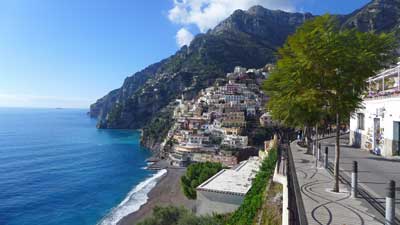 The Amalfi Coast is famous for a reason — its dramatic cliffs, colorful villages, and winding seaside roads make it one of the most beautiful stretches of coastline in the world. Positano and Amalfi are the main towns you’ll want to visit, both reachable by bus, ferry, or taxi from Sorrento. Just be aware that the roads are narrow and can get extremely congested during peak season, which is why the ferry is often the most relaxing (and scenic) way to go.
The Island of Capri is another iconic destination, known for its upscale vibe, natural beauty, and the famous Blue Grotto. It’s an easy ferry ride from Sorrento, making it a perfect day trip. Even if you skip the expensive boat tours, just walking through the main town and visiting the viewpoints is worth the journey.
If you’re deciding between the two, the Amalfi Coast offers more variety and local charm, while Capri is more polished and feels a bit like stepping into a glamorous postcard. Both are worthwhile, but Sorrento remains the best home base to explore them without the hassle of moving hotels.
Bologna is the best addition for foodies
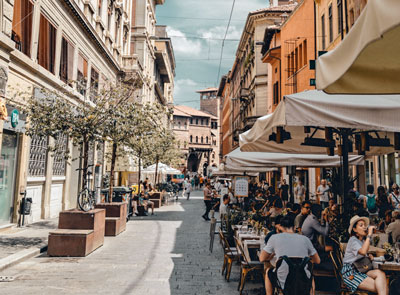 If you’re looking to add a destination that’s a little off the typical tourist trail — but still very easy to reach — Bologna is a fantastic choice. Known as Italy’s culinary capital, Bologna offers some of the best traditional food in the country, including tagliatelle al ragù (what many people mistakenly call spaghetti Bolognese), tortellini, mortadella, and more.
The city itself has a lively, youthful vibe thanks to its university — the oldest in Europe — and a beautiful historic center filled with portico-covered streets. It’s also less touristy than Florence or Venice, so prices are a bit lower and the experience feels more authentic.
If you’re passionate about Italian cuisine, Bologna is absolutely worth a 1- or 2-night detour. It’s located on the main train line between Florence and Venice, so it’s an easy stop without adding much travel time. Plus, it’s an excellent place to take a food tour or cooking class if you want to dive deeper into the culinary scene.
Florence to Bologna by train: About 40 minutes
Bologna to Venice by train: About 1.5 hours
Cinque Terre photo by World Walk About on Flickr
Sample Itineraries for France and Italy Trips
You can mix and match cities depending on how much time you have, but here are a few sample itineraries that balance sightseeing with a realistic travel pace. Remember, three nights per major city is the sweet spot for not feeling rushed.
7 Nights – Classic First-Time Combo
- Paris (3 nights)
- Fly or take the train to Rome (4 nights)
This is the most efficient trip if you’re short on time. You’ll see the two most iconic cities in Europe with enough time to enjoy the highlights without burning out.
10 Nights – Balanced France & Italy
- Paris (3 nights)
- Florence (3 nights, with a half-day trip to Pisa or wine country)
- Rome (4 nights)
This is a great pace for a first trip, allowing you to explore France’s capital, soak up the best of Tuscany, and finish with enough time in Rome to see the big sights and relax.
12–14 Nights – Add the Riviera or Venice
Option A:
- Paris (3 nights)
- Nice (2 nights)
- Florence (3 nights)
- Rome (4 nights)
Option B:
- Paris (3 nights)
- Florence (3 nights)
- Venice (1–2 nights)
- Rome (4 nights)
Adding the French Riviera or Venice gives the trip more variety. Nice is a great option in warmer months, while Venice is iconic but best with just a short stay.
15–18 Nights – Expand to Sorrento or Bologna
- Paris (3 nights)
- Florence (3 nights)
- Rome (4 nights)
- Sorrento (3 nights for Amalfi Coast/Pompeii/Capri)
or
- Paris (3 nights)
- Florence (3 nights)
- Bologna (1–2 nights between Florence and Venice)
- Venice (1–2 nights)
- Rome (3–4 nights)
If you’ve got more than two weeks, slowing down is smarter than adding more cities. Sorrento offers a relaxing coastal base with easy day trips, while Bologna is perfect for food lovers looking for something a bit different.
Hi Roger!
This is my final plan!
-1 night Venice
– 2 night Florence
– 3 or 4 nights total in Siena and perhaps Tuscan town (any suggestions)
– 3 nights in Rome
– 3 nights in Vietri Sul Mare
– 2-3 nights in salerno or sorrento or another amalfi coast town?
– 2 nights in Rome
– Flying home from Rome
My questions are:
1.) 4 nights in Tuscany and 5 nights in Amalfi Coast? Or 3 nights in Tuscany and 6 nights on the Amalfi Coast? What questions should I ask my family that will help us decide? We hope to see Chianti, San G, Pienza, Montalcino , Montelpuciao, Orvieto, Val D’Orchia, volterra and perhaps Lucca and Pisa?
1a) what kind of day tours should I be looking for that can cover the above places in relative ease.
2.) Is 5 nights in Rome too many days?
3.) is Vietri Sul Mare a good base to explore Amalfi Coast? Where else should I stay?
4.) does the flow of itinerary make sense?
5.) any other suggestions?
Thanks for the blog and suggestions!
Lean,
1.) I would vote for more time in Tuscany. The Amalfi Coast is really lovely, but it’s little more than a series of villages set in the hillside above little beaches. In other words, the Amalfi Coast is a place to relax, and actually getting between the villages is a bit of a hassle. You typically have to climb up a hill and catch a public bus to the next town, and then walk down the hill into the town from there. And the buses are usually crowded in summer. Tuscany is a large region in Italy that is one of the world’s most historic and famous art hot-spots and food destinations.
In general I would recommend trying to sample fewer different places. For example, the villages along the Amalfi Coast are all fairly similar, and the towns in Tuscany are mostly quite similar. If you only spend a couple hours in each one and then hop on another train, you’ll be spending half your days in transit.
2.) Rome is a huge city filled with sights, but it’s also very hectic and many first-time visitors get a bit frustrated at times. I would probably spend no more than 4 nights there, and 3 might even be enough. It’s very crowded as well.
3.) Vietri Sul Mare is near the eastern edge of the Amalfi Coast. It would be a good base, but Positano and Amalfi are the more popular (and probably expensive) towns there.
4.) Yes, I think the itinerary is logical. Again, I would probably shorten my stay in Rome, so you might even do those two days in Sorrento because it’s nice and the ideal base to visit Naples and Pompeii and the isle of Capri.
5.) This looks very well researched and I haven’t been to every one of your planned stops, so I don’t have much else to stay. There are some very nice “hill towns” in Tuscany that are great for day trips or even an overnight stay.
Have a great trip. -Roger
Hi Roger,
Thank you thank you! If you happen to be in Italy when i am there – would love to toast you! Truly guide-extraordinaire! 🙂
I feel bad asking so many questions – so i am going to try to figure out on my own before asking u some “real” questions. 🙂 Thank you Roger!
Lean Sing
Roger,
If i may add. I really appreciate your encouragement and your advice.
I have posted similar itinerary on other forums and have been constantly told that i am attempting too much or being unrealistic with my itinerary.
While i understand that there is much to see in each of these major Italian cities – one has only so much time and it is quite disheartening to hear remarks such as “time to get realistic.”
My question then…is my itinerary really that “unrealistic”?
Thanks
Lean Sing
Lean,
I know exactly what you mean by so-called “experts” who spend their days in travel forums lecturing new travelers that “You can’t meaningfully visit ANY city in less than two weeks!” and that sort of thing. They are just being snobs and jerks. I’ve been all over the world and spent over 5 of the last 10 years on the road, including visiting just about every place in Europe. I can assure you that 3 nights is an ideal first visit to almost any city, and it’ll give you plenty of time to see the top 7 or 8 things on your list, without rushing around too much. And fortunately, Italy is easier than most places because the main train stations are centrally located and the big tourist cities are all about 90 to 120 minutes apart by train.
Partly in response to people who lecture other people that we all have to travel as slowly as they do, I wrote an article a few years ago about the benefits of Fast Travel. You might find it interesting. Have a great trip and let me know if you have any other questions. -Roger
Thank you Roger!
Thanks once again Roger,
i have unfortunately overestimated the amount of annual leave i have. Turns out i can only be in italy for 15 days.
Venice 1 Night
Florence 3 Nights
Rome 4 Nights
Sorrento 3 Nights
Sicily 4 Nights
Would u recommend any tweaks? Perhaps less nights in Rome and more nights in either Sorrento or Florence?
Thanks!
Lean Sing
Lean,
That is a shame, but you will still have plenty of time in each place and your first visit to Italy will be far more thorough than most people.
Rome for 4 nights and Sorrento for 3 nights looks good, but it might be more enjoyable to switch them, as you suggest. Again, the thing about Rome is that it’s large and filled with top sights, but it’s also kind of chaotic. For example, just crossing the street is stressful because there are no proper crosswalks in some of the busiest tourist areas. Also, the top sights will be packed, and that gets a bit old after a few days. You can see the top sights including the Coliseum, Trevi Fountain, Spanish Steps, and Pantheon in one day, and the Vatican Museum in another day. In both cases you’ll still have late afternoon and evening to stroll through the public squares and have dinner and such.
Then when you get to Sorrento it’s just much more pleasant and there are also top sights nearby including Pompeii, Naples, Amalfi Coast, and Capri. You could go either way, depending on which place sounds like it would suit you better. Have a wonderful trip. -Roger
Thank you Roger for such a detailed reply!
My tentative plan is:
Day 1 – Arrive Venice
Day 2- Leave for Florence
Day 3,4,5 – Florence
Day 6 – Leave for Rome
Day 7,8,9 – Rome
Day 10 – Leave for Sorrento
Day 11,12,13 – Sorrento
Day 14 – Fly to Siciliy
Day 15,16,17 – Sicily
Day 18 – Fly back to Singapoer
My questions are:
1.) Would it be too rush in venice?
2.) Any places i should cut down?
3.) Any out of the beaten track i should visit? Perhaps Lake Como – i would really love to explore “quintessential” italy rather than just the typical touristy spots. 🙂
Thanks once again!
lean,
You can see all of the main sights in Venice in 24 hours or even less. So it really depends on when your flight lands. I notice on your itinerary that you have a full day dedicated to leaving for each city. One nice thing about Italy is that these cities are all fairly close to each other and connected by high speed trains. In other words, you can leave Venice at noon and arrive in Florence at 2pm. With that in mind, I recommend 3 nights in each city, giving you two full sightseeing days in the middle. With that in mind you could actually move a bit faster, even if you stayed two nights in Venice.
I don’t think you need to cut out any of this, and I do think you have time for Lake Como if you wanted. In my opinion, Lake Como may be a bit overrated. It’s a nice looking lake surrounded by mountains, and there are several traditional Italian towns near its center, but I don’t find it too special. It’s mostly a weekend getaway for wealthy people from the Milan area. I’m glad I visited it, but I find the places around Sorrento to be more interesting.
Speaking of that, there is so much to do in the Sorrento area that you could stay there 5 days and still wish you had more. Naples is a great day trip, and Pompeii is a good half-day trip. There is also the Amalfi Coast and the island of Capri nearby. Sorrento itself is really nice, and it’s not overly touristy like Venice or parts of Florence or Rome. Let me know if you have any other questions. -Roger
Dear Roger,
I must say not only is your website a great treasure trove of information but i am mighty impress with you answering every single question posted! The suggestions you have made are tailored to every request and i am not sure how you do it but you are amazing! I know you have received many thanks for the website and for your feedback but let me thank you once again for this amazing website and for you too. I actually feel bad that i am going to ask you questions which you must have answered a gazillion times throughout the various questions and answers found on this thread – but i hope i do not come across shameless by asking questions too!
I am planning to my first ever trip to europe..and i have 2-2.5 weeks for it. Initially i was contemplating doing london/France/Italy…then i narrowed it down to France/Italy…then i think i am settled on Italy itself.
There are four main things i am keen to explore/try in italy:
1.) Historical Sites
2.) Amazing Culture
3.) The amazing food
4.) Hopefully Juventus or AC Milan Football Stadium
I would love to do the Big 3 (Rome/Florence/Venice) and do Naples/Amalfi coast/Pompeii/Sorrento and Siciliy
Based on what i am keen to explore…
1.) My first question is how many days would u recommend in each place for a 2-2.5 Week tour.
2.)And if there is one place you would choose for the most amazing food…which place would it be?
3.)Oh…we (my parents and i) are thinking of going in late august and Early September. Would that be a good time to go? Or should i wait till mid september?
4.) What would be the order of places i should visit? Aka..what should i visit first and what i should i visit last? I am flying from Singapore so that would help me plan my arrival and departure.
Once again thank you for your enthusiastic and helpful comments.
Blessings,
Lean Sing
Lean Sing,
Thank you for the kind words. I have been to nearly every major place in Europe and I enjoy helping people plan trips. Also, this is my full-time job and these questions help me figure out what people want to know, so I write content to reach even more people. In other words, it’s sort of like market research.
If you are going to Italy for 14 to 18 days, I’d do 3 days in Rome (it’s a big city but it’s also a bit crazy and gets old pretty quickly), 3 days in Florence, and 1 or 2 days in Venice. I’ve yet to make it to Sicily and I’m not sure I’d recommend it for a first trip. If you did go I think you’d need at least 3 days. It takes quite a bit of time to get there, even from Naples, because the trains are slower the farther south you go.
For the balance of the trip, which could be 3 to 6 days or so, I’d base myself in Sorrento to see all of the things around there. It’s kind of a low-key place, but it’s very nice and fairly easy to visit because so many people speak English there.
The food in Italy tends to be different for each region. As you probably know, Naples claims to be the birthplace of pizza. There are two very old pizza places near each other there, and I was blown away by how good the pizza was at the less-busy place on the day I went. I expected it to be good, but not that good. Many people say that Tuscany, including Florence, has the most notable cuisine. There are better people to comment on this topic, I’m sure.
It will be very hot in late August, and air-conditioning isn’t quite as common there as it is in some other places such as Singapore. Also, about half of Italian office workers take all of August off and head to the nearest beach. So beach areas are insanely crowded in August, while big cities feel strangely empty. I’d say the weather would be nicer in September, and crowds will be smaller as well. I’d go in September if it were me. But August in Rome is still probably cooler than August in Singapore.
I’d start in Venice and then Florence, Rome, and down to Sorrento. If you want to do Sicily you can take a train from Naples or possibly even fly. Let me know if you have any other questions. -Roger
Hi Roger, I’ve been readind your blog for the past hour, thank you so much for all the tips and personal advices.
My boyfriend (from israel) is doing a last minute two months trip in europe because he got his visa refused for his original trip in the US. I’m trying to help him to plan 🙂
His trip :
– from mid october to the end of december
– very flexible with timing
– no car
– very interested in nature, hike, views and big cities, not very in historical sites or museums
– least rain possible and not very cold weather (not a lot warm clothes after his two months in california)
The plan so far is : fly from the US to Paris to visit me for a few days, then spending two weeks in France. I’m french and i’m having a hard time planning him a nice itinary in France, with no car and no rain/very cold weather. Any tips would be valuable (Lyon? then head south? But I read provence is not worth it without a car… then nice?)
Then he is heading to Italy for 3 weeks (or a bit more), the plan is :
2 days in Milan (or 1)
2 days in cinque terra
2 days in Florence
1 day in Pisa (or less, just a day trip from florence)
3 days in the nature in the area of Florence called Toscana
4 days in Rome
1 day in Vatican
4 days in Naples and its surroundings : sorrento, almafi coast
4 days in Puglia and its surroundings
2 days in Bologne
2 days in Venice
+ maybe a few days in sicilia
And then he is heading for Spain for 3 weeks, we still need to plan this, then joining me in my city in Bordeaux for Christmas.
However, I think three countries in 2 months might not be enough. Do you have any advice on a country not too far from these (I mean accessible with train or cheap flights), for 1 or 2 weeks, without a car, and expecting almost no rain or very cold weather? It would be before Italy so the beginning of November or after Italy so at the end of November…
I hope this was not too confusing, I really want to help him build a great trip after his big disappointment from the US visa.
Thank you a lot,
Camille
Camille,
I’ll try to answer the questions in order…
Since you are French I’d assume you’d have a much better idea of where to take him than I would. Nice and that area should definitely be on your list, as it’s still reasonably pleasant there in late October. Lyon and Marseille are not really tourist cities for most visitors, but with a French person there I’d imagine you could unlock a lot of the local culture for the both of you. You might also consider Avignon as an interesting stop.
Cinque Terre will be quite dead in early November, but at least you’ll mostly have it to yourself. I’m not sure I’d go there that time of year. And I’d do Pisa as a day trip from Florence, as it takes only about an hour each way.
As for where else you might go, Spain is obviously huge and the weather in the south will still be pretty good that time of year. Portugal actually has slightly warmer weather on average, and there is a lot to see there as well. Those two countries are quite different from one another, mostly because Spain was shut off from most of the world for those decades.
Croatia is another one to consider, although November is the start of the rainy season there, so maybe not. You could go to Athens or other places on the Greek mainland, which are still fairly warm and dry in November. You could get a cheap flight out of one of the larger cities you are already visiting. The Greek Islands are mostly shut down by November, so I wouldn’t recommend going to one of them.
Of course if you want warm and pleasant weather in the autumn or winter you could always fly to the Canary Islands. Tenerife is the largest and the easiest for English speakers, and it’s got some good nature and hiking and even a volcano. You can get very cheap flights around Europe, especially that time of year. I hope this helps. Let me know if you have other questions. -Roger
Dear Roger,
We are planning a 2 week trip to France – Italy this July for a family of 4 (my kids are 14 and 12). We found your valuable blog while searching for itinerary 😉 This is our first trip in these 2 countries so we would like to do Paris (4 nights), Nice (2 nights), Venice (2 nights, Florence (3 nights), Rome (3 nights) and maybe Milan 1 nights.
The problem is we already have a return ticket to/from Paris CDG Airport so we have to go back to Paris for flying home.
We are thinking of flying to Paris, then do a connecting flight or take train to Rome, then Florence, Venice (Milan), Nice and Paris by trains. From Paris to Rome, is there a direct overnight train or we must change in Nice and Venice/Milan? what do you think is the better option (cost/time)?
Thank you very much.
Thuy,
There is an overnight train from Rome to Paris, which takes a bit over 14 hours and changes in Milano and Dijon. However, I’m sure it’s very expensive. I’m not a big fan of night trains, especially in the age of cheap flights like this. If I were you I’d book a flight from Paris to Rome or the other way around if you prefer.
The only tricky thing is that Paris and Rome each have two major airports, and the cheaper flights often use the smaller ones. So the cheaper flight from Rome to Paris might be into Orly Airport. If that’s the case you’ll either have to allow a few hours to get from there to CDG for your flight home, or pay a bit more for a flight into CDG. Both airports are on the commuter train lines, so getting between them isn’t difficult, but it may not be worth the hassle. Let me know if you have any other questions. -Roger
Roger,
First, I want to sincerely thank you for the time you have taken to answer each question that has been asked of you. My high school sweetheart wife and I have been planning our first trip to Europe for over a year now and this website, with the various questions and responses you have provided has been more than any other resource I’ve found (yes, even more than Rick Steves). I’ve pretty much laid out our rough itinerary and wanted to get your feedback to see if it seems reasonable . The outline is pretty much a hybrid of the advice I’ve seen here as well as some sights that Steves provides as well. As you’ll notice, our objective is to see some of the big sites and cities, but spend the bulk of our time out of the busy cities, enjoying the Tuscan countryside, but close enough we can use them as a “hub” as we would if we were staying in Florence.
Tuesday 6-Jun Arrive Paris & overnight stay in Paris. Sightseeing possible (stay in Montmartre neighborhood or Le Marais)
Wednesday 7-Jun Paris Sightseeing & overnight
Thursday 8-Jun Paris Sightseeing with overnight train to Rome
Friday 9-Jun Arrive Rome in morning, sightseeing with overnight
Saturday 10-Jun Rome sightseeing & overnight
Sunday 11-Jun Rome sightseeing & overnight (Depart Rome morning of 12th and ride the train to Siena to rent a car to drive as we visit Tuscany region).
Monday 12-Jun Montepulcino overnight (use as a hub for southern Tuscany)
Tuesday 13-Jun Montepulcino overnight
Wednesday 14-Jun Montecatini Terme overnight (use as a hub for northern Tuscany. Include day trips to Cinque Terre, Pisa, and trip(s) to Florence)
Thursday 15-Jun Montecatini Terme overnight
Friday 16-Jun Montecatini Terme overnight
Saturday 17-Jun Montecatini Terme overnight (or drive to Florence to turn in car and take train to Venice late afternoon for overnight in Venice (3.5 hour train ride from Florence to Venice)
Sunday 18-Jun Train to Venice & Sightseeing- Overnight in Venice
Monday 19-Jun Venice & flight to Paris/overnight (flight is at 9:00 so most of the day can be spent sight seeing Venice)
Tuesday 20-Jun Fly home
Chett,
Thank you for the kind words. I’m a huge fan of Rick Steves and I have used his guidebooks and advice to plan many of my own Europe trips. As a result, much of the advice that I give ends up being similar to his advice.
I think your plan looks fantastic. Speaking of Paris, I love the Montmartre neighborhood, but I also agree with Rick Steves that the Rue Cler neighborhood (near the Eiffel Tower) can be even better for a short visit because it’s so central AND it’s so charming and French.
And personally, I’m not a big fan of overnight trains. They are rarely cheap, you miss all the scenery, and I never sleep well on them. But they can be an unforgettable experience so it may be worth a try.
I’m also not familiar with some of your Tuscan stops, but it’s clear that you’ve researched this well. And if you are following Rick Steves advice on where to go, I’m sure you’ll have a wonderful time. I’m happy to have helped, and let me know if you have any other questions. -Roger