
France and Italy Itinerary Ideas for 1, 2, or 3 Week Trips
I’ve been traveling through France and Italy since I was a little kid, and they’re still two of my favorite places to revisit. My first trip had me feeding pigeons in Venice and pretending to like gelato (I’ve since gotten better at both). Since then, I’ve returned many times, and over the years, I’ve learned what makes for a fun, efficient, and not-too-rushed first-time itinerary through these iconic countries.
This guide will help you figure out how many cities to visit, how long to stay in each place, and how to put together a trip that won’t leave you exhausted by day four. I’ve also included sample itineraries that cover 7, 10, 14, and even 18-night trips, using the pacing I’ve found to be the sweet spot for most travelers.
If you haven’t seen them yet, you’ll also want to check out:
The advice in this article is designed for people who want to see the most famous sights in France and Italy while still having time to enjoy the local culture — not just rush from city to city. I’m a big believer that 3 nights in each major city is ideal, with occasional day trips to places like Pisa, Cinque Terre, or the Amalfi Coast.
This article was most recently updated in August, 2025.
How Long Should You Stay in Each City?
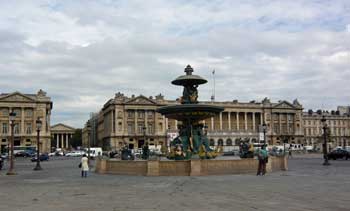 Trying to see all of Italy and France in two weeks? That can easily turn into a blur of trains, hotel check-ins, and hurried sightseeing. In cities like Rome or Paris, even booking two nights leaves you with just one full day to explore—and that rarely cuts it.
Most travel experts, including myself, recommend minimum 3 nights per major city — ideally even more if you want to soak in the food, culture, and pace. This helps avoid burnout, lets you feel grounded, and gives you space to pivot if plans change.
>>>Going just to Italy?: Here are the best first-time Italy itineraries for 3 days to two weeks
Best Airports to Start and End Your Trip
If you’re planning to visit both France and Italy on the same trip, your best bet is to fly into one country and out of the other — known as an “open-jaw” ticket. These fares are surprisingly common and often cost the same as round-trip tickets into and out of a single airport.
The most popular airports for this kind of trip are Paris (CDG) and Rome (FCO). Both have nonstop flights to major cities around the world and are ideal starting points for first-time visitors.
The first thing to try is this:
- (your city) to Paris one-way
- Rome to (your city) one-way
Compare that to this:
- (your city) to Paris round-trip
- (your city) to Rome round-trip
Open-jaw tickets are especially useful if you only have 7 to 10 days — they save you from doubling back and give you more time to enjoy each destination. If you’re flying from North America, you’ll often find the best deals into Paris, but always check both directions before booking.
Getting Around Once You’re in Europe
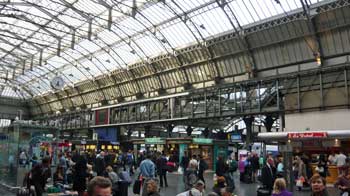 The good news is that getting between cities in France and Italy is easy, fast, and surprisingly affordable — especially if you book in advance. High-speed trains are usually the best way to go, offering a comfortable, scenic ride right into the heart of each city. Unlike airports, train stations are central, so you avoid long transfers and security lines.
If you’re going from Paris to Italy, the overnight train from Paris to Venice used to be a favorite, but it’s no longer running. These days, most travelers take a quick flight — often cheaper than the train — or make a stop in Switzerland or the French Riviera to break up the journey.
Once you’re in Italy, trains are almost always the best option. Routes like Rome to Florence or Florence to Venice are high-speed, with frequent departures and short travel times. Booking early on Trenitalia or ItaloTreno can get you excellent fares — sometimes as low as €20 for first class.
There’s really no need to rent a car for a trip like this unless you’re venturing deep into the countryside. For city-to-city travel, stick with trains — they’re faster, easier, and far less stressful.
Best Cities in France for First-Time Visitors
Paris (minimum 3 nights but even that is rushing it)
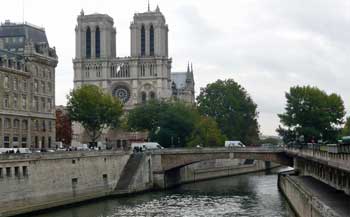 Paris is the perfect gateway to a France and Italy trip, and it easily deserves at least 3 nights — honestly, even that feels rushed. I’ve been to Paris many times over the years, and I still discover something new each visit. The city is endlessly walkable, full of hidden cafés, elegant parks, and world-class museums that never disappoint.
My personal favorites include an evening Seine river cruise (timing it for sunset feels magical), wandering through the narrow streets of Le Marais, and spending a lazy morning in a neighborhood café with nothing but a croissant and a bit of people-watching. The Eiffel Tower is iconic, of course, but I think the real magic of Paris comes from the smaller moments — finding your own favorite corner of the city.
If you plan on seeing several of the major sights, the Paris Pass is worth looking into. It includes entry to the Louvre, Musée d’Orsay, Arc de Triomphe, and even a Seine cruise, often saving you both money and time in ticket lines. I’ve used it myself and found that it’s a stress-free way to hit the highlights without constantly pulling out your wallet.
For first-timers, I recommend spending 3 or 4 nights in Paris before flying or taking a train south toward Italy. This gives you enough time to see the big landmarks without missing the slower, more romantic side of the city.
Provence region (optional 2 or 3 nights)
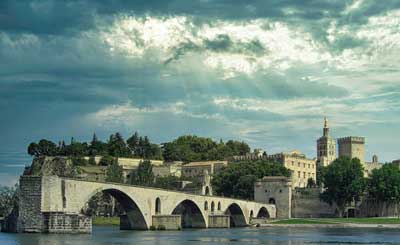 If you’re heading from Paris to the south of France, the most efficient route is typically to go straight to Nice and the French Riviera. But if beach towns aren’t your thing — or if you’re traveling from November through March, when the coast is quiet — the Provence region offers a completely different and equally memorable detour.
This area is where Van Gogh lived and painted, and it’s home to the Papal Palace in Avignon, where seven popes resided in the 1300s. Arles is the historic heart of the region and a good base for exploring, though Avignon might be even better for first-time visitors — it’s charming, compact, and very tourist-friendly.
From Avignon, you can explore the Côtes du Rhône wine road, a scenic trail linking hilltop villages, vineyards, and wineries. Provence also has a distinct cuisine — lighter and more Mediterranean — and even by French standards, the food is excellent.
This isn’t necessarily essential on your first trip unless you have a longer itinerary or specific interest in food, wine, or rural France, but it’s a beautiful and rewarding region to explore if time allows.
Paris to Avignon by train: About 3.5 hours
Avignon to Nice by train: About 3 hours
Nice, France (minimum 2 nights)
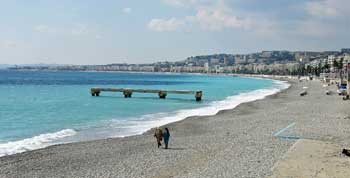 NiceNice is the ideal base for exploring the French Riviera, and it works in almost any season. While it’s best known as a summer destination, Nice stays active year-round, with locals out enjoying the seafront promenade even in the cooler months.
First-time visitors often underestimate how different this region feels compared to Paris. The Mediterranean vibe is strong — slower pace, brighter colors, and a coastline dotted with glamorous spots like Monaco, Cannes, and Èze, all of which are easy day trips by train or bus.
Nice itself has a charming old town, great views from Castle Hill, and some solid museums if the weather turns. I’ve stayed there in both winter and spring, and the combination of scenery and ease of access makes it one of the best intro stops in France. And since it has an international airport, you can often fly home from Nice rather than backtrack to Paris — a major plus.
Avignon to Nice by train: About 3 hours
Nice to Rome by air: About 1.5 hours (direct flights are common)
Best Cities in Italy for First-Time Visitors
Milan (1 night or just skip it)
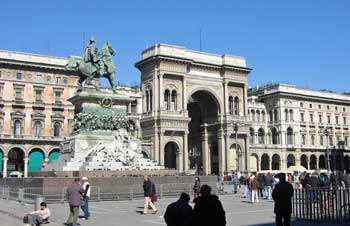 Milan might be Italy’s fashion capital and a major business hub, but for most first-time visitors, it’s not a must-see. If you’re flying into Milan, it’s worth spending a night to visit the magnificent Duomo di Milano and take a stroll through the upscale Galleria Vittorio Emanuele II. If you’re into art, you can try to snag tickets for The Last Supper, but those tend to sell out months in advance.
Personally, I’ve always found Milan a bit cold and formal compared to the rest of Italy. It’s very modern and efficient, which might be refreshing after Paris, but it lacks the charm and walkable beauty of cities like Rome or Florence. That said, if your flight lands here or departs from here, a short stay can make sense.
Nice to Milan by train: About 5 hours
Milan to Florence by train: About 1 hour 55 minutes
Venice (1 night minimum, 2 nights maximum)
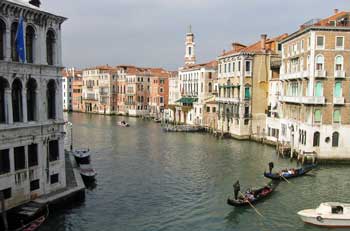 Venice is one of the most unique and beautiful cities in the world — and also one of the most touristy. Everyone should see it at least once, and even though it’s often crowded and expensive, the experience of wandering through its maze of canals and bridges is worth it. Just don’t overstay. The novelty fades quickly, especially when you realize how limited the dining options are near the major sights.
If you arrive in the afternoon, spend your first evening wandering, soaking in the twilight views, and maybe taking a sunset vaporetto ride down the Grand Canal. Then wake up early to explore St. Mark’s Basilica, Doge’s Palace, and the Rialto Bridge before the cruise ship crowds arrive.
From experience, I’ve found that 1 or 2 nights is ideal. That gives you plenty of time to see the best of Venice without getting overwhelmed — or overcharged. And if you’re visiting in summer, bring patience: the narrow alleys and packed squares can feel claustrophobic by midday.
Florence to Venice by train: About 2 hours
Venice to Rome by train: About 3 hours 45 minutes
Florence (2 nights minimum, plus side trips)
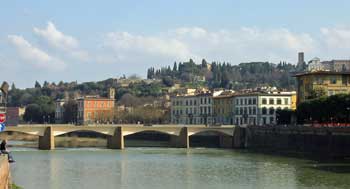 Florence is the heart of Tuscany and the birthplace of the Renaissance — and for many travelers, it ends up being their favorite stop in Italy. It’s compact, beautiful, and packed with world-class art and architecture, yet it also feels more relaxed than Rome or Venice. Two nights is the minimum, but if you’re planning side trips (which you absolutely should), it’s worth staying longer.
Climbing to the top of the Duomo is a highlight, as is seeing Michelangelo’s David at the Accademia. But what makes Florence even better is that it’s the perfect base for exploring Tuscany. A half-day to Pisa, a full day in the Cinque Terre, or a countryside wine tour through Chianti are all easy from here. You can even zip down to Rome in under 2 hours if needed.
For hotels, staying near the train station (Santa Maria Novella) is ideal for easy arrivals and day trips, while areas closer to the Duomo or Ponte Vecchio put you right in the center of the action.
Venice to Florence by train: About 2 hours
Florence to Rome by train: About 1.5 hours
Pisa (a few hours on a day trip at most)
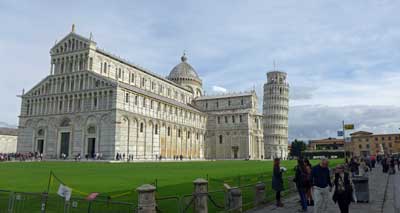 Let’s be honest — you come to Pisa for the Leaning Tower, and there’s nothing wrong with that. The tower itself is iconic and surprisingly impressive in person, especially when you realize it’s just one piece of a gorgeous complex that includes a cathedral and baptistery all on the same square.
Fortunately, Pisa is an easy and worthwhile day trip from Florence, taking just about an hour by train. You can walk from the train station to the tower in 20 minutes, or grab a quick taxi. Plan on a few hours total unless you want to climb the tower (you’ll need advance tickets), and then head back to Florence in time for aperitivo.
The rest of Pisa is a typical small Tuscan city with some charm, but most visitors don’t feel the need to stay overnight. That said, if you’re collecting classic photo ops on your trip, the Leaning Tower is a must.
Florence to Pisa by train: About 1 hour
Cinque Terre (1 night, optional)
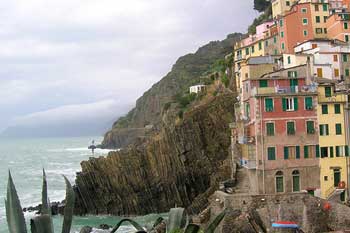 The Cinque Terre — a string of five cliffside villages along Italy’s Ligurian coast — has gone from hidden gem to international favorite, and it’s easy to see why. With pastel-colored buildings clinging to rocky hillsides, turquoise water below, and scenic hiking trails connecting the towns, it’s one of the most visually striking places in all of Europe.
That said, it’s not for everyone, especially if you’re short on time or visiting outside the warmer months. In cooler seasons, many restaurants and small hotels close, and the towns can feel a bit too quiet. In summer, they can be packed to the point of frustration. But in April, May, or September? Pure magic.
You can visit on a day trip from Florence or even Pisa if you get an early start, but staying one night lets you enjoy the villages after the day-trippers have left. The town of Monterosso has the best beaches, Vernazza is the most photogenic, and Riomaggiore is a common base for budget travelers.
Florence to La Spezia (gateway to Cinque Terre): About 2.5 hours by train
Rome (minimum 3 nights)
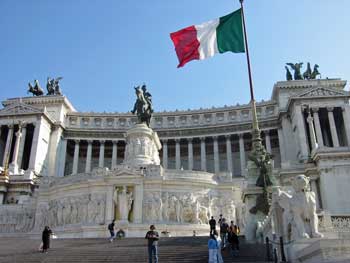 Rome is overwhelming in all the best ways. It’s packed with history, buzzing with life, and constantly serving up postcard views at every turn. The Eternal City is a must for first-timers, and three nights is the sweet spot to soak in the highlights without feeling rushed.
The main attractions are clustered fairly close together, so you can cover a lot on foot. One full day is enough to explore the Colosseum, Roman Forum, and nearby sites like the Pantheon and Trevi Fountain. Another full day can be devoted to the Vatican Museums, St. Peter’s Basilica, and maybe a guided walking tour or open-top bus ride to tie it all together.
My advice: Stay in or near the Centro Storico, or slightly east in the Monti neighborhood if you prefer a quieter local feel. Monti is still walkable to the Colosseum but offers a more authentic vibe with better restaurants and cafés.
Rome can be chaotic, but that’s part of its charm. After many visits, I still find new corners and surprising moments every time I go. The key is not to overschedule — leave time to wander, grab gelato, and watch the city unfold.
Florence to Rome by train: About 1.5 hours
Rome to Paris by air: About 2 hours
Naples/Pompeii/Sorrento/Amalfi Coast (optional up to 4 nights)
The “big 3” in Italy are Rome, Florence, and Venice, and if you have time for only 3 cities those are the obvious ones to choose. But if you want to dig deeper into Italy and you have enough time, your next best choice will be to base yourself in Sorrento and use it to explore Naples, the ruins of Pompeii, the Amalfi Coast, and the island of Capri.
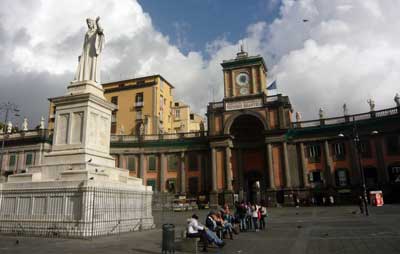 Naples has a reputation — some deserved, some exaggerated — but it’s definitely a city that leaves an impression. It’s fast-paced, gritty, and chaotic, yet packed with history, character, and what many call the best pizza in the world. The city’s historic center is a UNESCO World Heritage site, filled with narrow alleys, bustling markets, and centuries-old churches.
That said, Naples isn’t for everyone. The lack of green spaces, constant traffic, and overall energy can be overwhelming, especially if you’re not staying long. For most first-time visitors, it works best as a day trip to explore the historic center and grab an authentic pizza lunch before heading back to a more relaxing base.
If you’re planning to visit Pompeii or the Amalfi Coast, staying in Sorrento is usually a smarter and more enjoyable choice.
Rome to Naples by train: About 1 hour
Naples to Sorrento by local train: About 1 hour
Stay in Sorrento
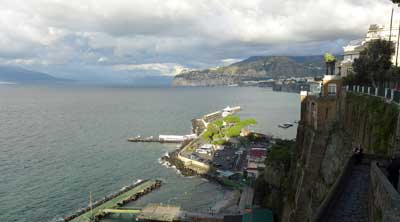 Sorrento is the perfect base for exploring this entire region. It’s a charming and relaxed town perched on cliffs overlooking the Bay of Naples, with a historic center filled with narrow lanes, outdoor cafés, and shops selling local limoncello. Compared to Naples, Sorrento feels calm, clean, and welcoming — making it a far better place to stay, especially for first-time visitors.
From Sorrento, it’s easy to take day trips to Pompeii, Capri, and the Amalfi Coast. Ferries and buses run regularly, and for some routes, splitting a taxi fare with fellow travelers can be surprisingly affordable and scenic.
I’ve always found Sorrento to be one of Italy’s most pleasant small cities. It has the charm of a coastal village but with enough restaurants and conveniences to feel comfortable for a multi-night stay. Plus, the views from the cliffs and marinas are reason enough to linger here for a few days.
Amalfi Coast and the Island of Capri
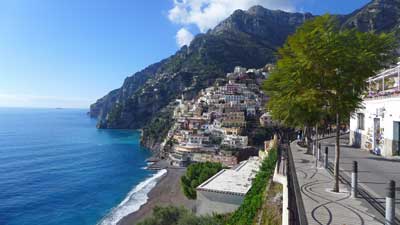 The Amalfi Coast is famous for a reason — its dramatic cliffs, colorful villages, and winding seaside roads make it one of the most beautiful stretches of coastline in the world. Positano and Amalfi are the main towns you’ll want to visit, both reachable by bus, ferry, or taxi from Sorrento. Just be aware that the roads are narrow and can get extremely congested during peak season, which is why the ferry is often the most relaxing (and scenic) way to go.
The Island of Capri is another iconic destination, known for its upscale vibe, natural beauty, and the famous Blue Grotto. It’s an easy ferry ride from Sorrento, making it a perfect day trip. Even if you skip the expensive boat tours, just walking through the main town and visiting the viewpoints is worth the journey.
If you’re deciding between the two, the Amalfi Coast offers more variety and local charm, while Capri is more polished and feels a bit like stepping into a glamorous postcard. Both are worthwhile, but Sorrento remains the best home base to explore them without the hassle of moving hotels.
Bologna is the best addition for foodies
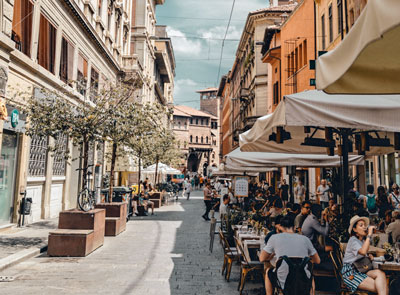 If you’re looking to add a destination that’s a little off the typical tourist trail — but still very easy to reach — Bologna is a fantastic choice. Known as Italy’s culinary capital, Bologna offers some of the best traditional food in the country, including tagliatelle al ragù (what many people mistakenly call spaghetti Bolognese), tortellini, mortadella, and more.
The city itself has a lively, youthful vibe thanks to its university — the oldest in Europe — and a beautiful historic center filled with portico-covered streets. It’s also less touristy than Florence or Venice, so prices are a bit lower and the experience feels more authentic.
If you’re passionate about Italian cuisine, Bologna is absolutely worth a 1- or 2-night detour. It’s located on the main train line between Florence and Venice, so it’s an easy stop without adding much travel time. Plus, it’s an excellent place to take a food tour or cooking class if you want to dive deeper into the culinary scene.
Florence to Bologna by train: About 40 minutes
Bologna to Venice by train: About 1.5 hours
Cinque Terre photo by World Walk About on Flickr
Sample Itineraries for France and Italy Trips
You can mix and match cities depending on how much time you have, but here are a few sample itineraries that balance sightseeing with a realistic travel pace. Remember, three nights per major city is the sweet spot for not feeling rushed.
7 Nights – Classic First-Time Combo
- Paris (3 nights)
- Fly or take the train to Rome (4 nights)
This is the most efficient trip if you’re short on time. You’ll see the two most iconic cities in Europe with enough time to enjoy the highlights without burning out.
10 Nights – Balanced France & Italy
- Paris (3 nights)
- Florence (3 nights, with a half-day trip to Pisa or wine country)
- Rome (4 nights)
This is a great pace for a first trip, allowing you to explore France’s capital, soak up the best of Tuscany, and finish with enough time in Rome to see the big sights and relax.
12–14 Nights – Add the Riviera or Venice
Option A:
- Paris (3 nights)
- Nice (2 nights)
- Florence (3 nights)
- Rome (4 nights)
Option B:
- Paris (3 nights)
- Florence (3 nights)
- Venice (1–2 nights)
- Rome (4 nights)
Adding the French Riviera or Venice gives the trip more variety. Nice is a great option in warmer months, while Venice is iconic but best with just a short stay.
15–18 Nights – Expand to Sorrento or Bologna
- Paris (3 nights)
- Florence (3 nights)
- Rome (4 nights)
- Sorrento (3 nights for Amalfi Coast/Pompeii/Capri)
or
- Paris (3 nights)
- Florence (3 nights)
- Bologna (1–2 nights between Florence and Venice)
- Venice (1–2 nights)
- Rome (3–4 nights)
If you’ve got more than two weeks, slowing down is smarter than adding more cities. Sorrento offers a relaxing coastal base with easy day trips, while Bologna is perfect for food lovers looking for something a bit different.
Hi Roger,
Loving this site! Amazing wealth of info.
Hubby and I are planning a month trip in June/July 2018: London, France, Italy (first time) want to do as much as possible.
Sooo many places to see and so much to do, its all a bit overwhelming!
We are planning on flying into either London or Rome (depending on my mum/school holidays as she will be teaching English in Naples)
Itinerary WISH LIST includes:
London 4 nights
Paris 4 nights
Nice 2 nights (Monaco as a day trip)
Milan or Lake Como (possibly 1 night)
Verona passing through to Venice
Venice 2 nights
Florence 2 nights
Cinque Terre 2 nights
A 1/2 day trip to Pisa
Rome 4 nights
Train from Rome to Naples onto Sorrento for 3 nights as a base to do the Almafi Coast
Possible night in Capri
Almafi Coast back to Rome to fly out
This could be reversed depending on mums work/time off. I.E flying into Rome and out of London
I’m a bit lost/unsure about how to go about piecing together/aligning/configuring all our ‘must visit places” in a succinct travel route without doubling back on ourselves.
I’m not sure if it would be better to go from Nice -> Milan -> Como -> Verona -> Venice -> Cinque Terre -> Pisa -> Florence -> Rome -> Almafi Coast
OR
Nice -> Cinque Terre -> Milan -> Como -> Verona -> Venice -> Florence -> Pisa -> Rome -> Amalfi Coast
Or should we skip Milan/Lake Como and go from Nice to Cinque Terra -> Pisa -> Florence up to Verona -> Venice -> then go down the East Coast to Rome or Almafi Coast ending in Rome?
Again if we fly into Rome this will be different and I am finding it hard to sort out a direct route without doubling back.
Can we do Rome -> Almafi Coast back up North without having to go back to Rome? Then would onto Venice -> Verona -> Milan -> Lake Como -> Florence -> Pisa -> Cinque Terra -> Nice -> Paris -> London work better?
Any suggestions/fine tuning would be much appreciated. Thanks
Leicha Keldie
Leicha,
I’m very happy to hear that the site is helpful. I’ll try to answer your questions in order. Your itinerary looks very good as it is, but maybe there are minor changes.
I think my first recommendation, which will make a lot of the rest of this easier, is to skip the Cinque Terre for this trip. There are a handful of very photogenic areas in the 5 Towns area, but at this point the crowds in peak months (such as June and July) are just so overwhelming that it’s become very hard to enjoy. Interestingly, those 5 villages were mostly forgotten by tourism until around 15 years ago when one or two major travel writers started recommending them as quiet and authentic fishing villages. Since then, they’ve become so popular that they have been “loved to death” as the expression goes, and they are even considering limiting tourist numbers per day. If you are really curious to see them you could do a day-visit while staying in Florence, but even that might be overwhelming.
If you do skip Cinque Terre for this trip (maybe you’ll go back on an October visit in the future?), the routing is much easier and more obvious.
Milan and Lake Como are also interesting. Milan isn’t a very touristy city, except the area around the cathedral is really lovely and worth a look, and of course the Last Supper if you reserve far enough ahead. Lake Como is really nice and very photogenic in good weather. You reach Lake Como on a suburban train from Milan that takes about an hour. Once off the train in Varenna, it’s a short walk through town to the ferry stop and from there you can take the frequent and cheap ferries to any of the other nearby towns. Varenna itself is nice and it’s convenient, although Bellagio is larger and has more hotels and shopping. It will also be fairly crowded, but I’d go to Lake Como rather than Cinque Terre.
To reach Sorrento you take the high-speed train from Rome to Naples in a bit over an hour. Once in Naples you then go downstairs from the main train station into the suburban train station below where you will catch the Circumvesuviana train that ends in Sorrento about 70 minutes later, and runs every 30 minutes. You can also take a ferry from Naples to Sorrento, but from the train station it takes quite a bit longer. With this in mind, you could do Sorrento before or after Rome pretty easily, depending on your flight schedule and all of that.
I’ve only ever changed trains in Verona, but it looks like the main town center is very nice and worth a stop. I hope this helps. If you are determined to do Cinque Terre I would do it from Florence or Pisa, rather than down from Genoa when you first get into Italy. As always, let me know if you have any other questions and I’ll be happy to try to help. -Roger
Hi Roger. Just back from spending 2 weeks driving from Avignon, France to Genoa, Italy and based on your recommendations, has to be the best vacation every traveled. The people, food and Images/ scenery along the French Riviera is something that can’t be put in words other then fantastic. Even thought we had been in Nice before, that trip even though spectacular, your suggestion to visit the small fishing villages/towns was even more impressive. Now for next year. We plan to stay in Sicily for two weeks around Catania, Do you have any suggestion for day trips? Thanks again for your recommendations and I hope others follow what your suggestion are, tey can’t go wrong!
Bill,
Thank you so much for letting me know that things went so well. It really makes trying to help people worthwhile when I get feedback like that.
I wish I could help with Sicily but I haven’t made it there myself yet. I spent a few weeks on Malta early last year and I was going to take a ferry to Sicily, but something came up and I ended up having to skip it and going to Barcelona by plane instead. I hear good things about Sicily, although two weeks sounds longer than most people stay. Sorry I can’t offer any good suggestions, and hopefully you can find answers on lonelyplanet.com or wikitravel.org. Best of luck. -Roger
Thanks Roger for your advice. I was definitely considering Avignon before. Is 6 days in Paris too much? Should I do 4 Paris and 2 Avignon? I’m flying into Paris so 1 day for jet lag. Also maybe Crete or Rhodes in Greece would be a good idea or is there not enough historical stuff to see? I was thinking if I stayed in Larissa I could do easy day trips to Delphi and Mycenae. If I did Turkey could you recommend some places? I’d love to see Troy’s old site, but other than that I’m open. I thought traveling to Turkey too would be too much when I was looking at it, but maybe I’m wrong? Should I cut a day or two off Athens and Thessaloniki? I figured to do day trips from Thessaloniki I’d need to do about 4 days to not make it too rushed.
Paris 1-4
Avignon 4-7
Venice 7-9
Florence 9-12
Rome 12-16
Athens 16-20
Larissa 20-22
Thessaloniki 22-25
Turkey 25-30? and where would you recommend flying out of to the US? I was thinking of flying out of Thessaloniki before, but I found it’s not a good idea since they do more domestic flights.
I have 30 days in September next year. I’m already scheduled for a tour company in Italy so Florence can’t have added days but Venice and Rome can. I’m free for suggestions in France and Greece on what cities to stay. I’m very interested in historical places, including castles, churches, famous battle sites, etc. I could care less about beaches, seaside little towns like Cinque Terre, and I don’t party or drink so nightlife stuff doesn’t interest me. My tentative schedule is below, feedback is welcome.
Paris 1-7 (possible day trips or Nice, not sure yet)
Venice 7-9
Florence 9-12
Rome 12-15
Athens 15-20
20-25 (Not sure where to stay between these two, I’d like to see Delphi and Mycenae and maybe Epidaurus but I’m open to ideas)
Thessaloniki 25-29 (I’m going to do Pella and Vergina as day trips if possible)
Trina,
There are many great historic towns in France that you might choose, and I think Avignon might be a good one for you with its history and architecture. Two days in Venice is a good length because it’s so small that you can see the highlights in that amount of time, and it’s so crowded that you’ll be ready to leave after two days. Three days in Rome is also good, although if you like history you might add another day. Rome is packed with excellent sights, and you need almost a whole day in the Vatican alone. But Rome is also fairly chaotic so most people don’t like to linger after they’ve seen the main sights.
Five days in Athens sounds like a lot to me. The main sights are amazing, but you can see them in 2 or 3 days. I don’t think I’d stay more than 4 days. My remaining experience in Greece is on a few islands so I can’t help much more than that. Some islands do have impressive ruins and such, but most people go to the islands just to sit on the beach in the day and drink at night, so it’s probably better that you stay on the mainland.
I’ve watched several travel shows and read a lot about Peloponnese and it seems to be the best region for history and sights outside of Athens, but again, I can’t say I’m an expert on it. I’ve spent far more time in Turkey and you might also consider popping over there for at least part of your stay. Istanbul is obviously one of the world’s most historic cities, but there is much more to see, of course. Sorry I wasn’t of more help. Feel free to ask other questions if you have them. -Roger
Hello Roger
Thank you for your comments on July 16 2017 they are very much appreciated.
I am wanting to ask you, whether you could recommend any places in the tuscany region to stay.
And also where else in France besides Paris would be great to stay and visit. I do love very friendly, cost effective and interesting places. Can you recommend any?
Once again, thank you for reading and replying to my questions.
Kind Regards
Helen
Helen,
In the Tuscany region you’ll obviously want to stay in Florence. Pisa is a popular day trip from Florence, as you can reach it in about an hour and see the Leaning Tower and the cathedral next door in a short time. The rest of Pisa isn’t very interesting. The next larger city to consider is Siena, but aside from having far fewer tourists than Florence, I don’t think it’s all that interesting. You might instead consider visiting one or two of the nearby hill towns for something very different. Volterra and San Gimignano are probably the best ones to consider for a first visit to Italy.
France is huge and it’s hard to recommend just a few places. The Loire Valley near Paris is a wonderful area with great scenery and a variety of amazing palaces you can visit. Nice is probably the second best place in France to visit because it’s a very interesting city on the Mediterranean and it’s also a 20-minute train ride from Cannes in one direction and Monaco in the other. Those towns are all packed and very expensive in July and August, but the rest of the year they aren’t too bad. I mention a few other places on my article about best first-time Europe itinerary ideas. I hope this helps. Let me know if you have other questions. -Roger
Thanks so much—We will overnight in Cinque Terre (Vernazza) and add a night onto the Barcelona stay
Thanks I will let you know how it goes
Judith:)
Great site and such a wealth of information—-I have spent along evening reading and feel I have already travelled
My husband and I have 10 days travel We are from NZ and this is our first Italy trip so we want to balance getting a taster to return. We leave London on 29 Aug flying out of Barcelona on 9 September
I have been researching and have come up with this train trip
1.fly into Florence 29 Aug (3 nights)
2.Cinque Terre (2 nights) We enjoy walking though I do read your comments about overcrowding SHOULD I LEAVE THIS OUT
3.Genoa (1 night)-this seemed to be a midpoint
4.Nice (2 nights)–side trips to Monaco
5.Carcasonne (1 night)the pictures looked spectacular
6.Barcelona (2 nights leave on 9 Sept)
Have I missed any places out?
I have read your many comments about Sorrento but I do not think I can add this into a 10 day itinerary??
I w0uld appreciate your comments
Judith,
I’m so glad to hear that you find this useful. I would say that 2 nights in Cinque Terre might be a bit much, even at the beginning of September. Those towns just seem to be so overcrowded in the summer months that many people no longer find them charming at all. On one hand you could just visit as a day trip from Florence, but so many other people are doing that that you’d only see them at their most crowded. If you stayed overnight you could at least enjoy the towns in the mornings and evenings when they are less crowded. It’s tough to say which is better.
And I agree that you don’t really have time for Sorrento on this trip. I haven’t been to Carcassonne, but that could be a good side trip and a way to break up the journey from Nice to Barcelona. So I think your itinerary should work well, although I think it’s a shame that you don’t have 3 nights for Barcelona because it’s a large and amazing city. Also, I’m not terribly fond of one-night stops such as in Genoa, because you don’t get to see much in one evening and you maximize your time checking into and out of hotels. Still, Genoa is an interesting city so it’s not crazy to do that.
I think this will work well or if you change a thing or two it could work even better. It looks like you have planned very well so far. -Roger
Hi Roger
My husband & I are travelling to Europe next year in particular Amsterdam to visit relatives and Mainz in Germany to visit my God Child but mostly Crotia, Italy and France we are looking at mid April for 6-8 weeks. We live in Australia and it has been 20 odd years since we were in Europe last.
I am planning to spend about 4 nights in Holland, 3 nights in Mainz and the rest in Crotia, Italy & France (we would like to travel to Spain, Portugal & Scotland but am thinking of leaving these for another trip)
In Italy I am interested in Lake Como – staying in Varenna or Bellagio) for 3 nights, Cinque Terre for 3 nights, Florence (visiting Pisa & Siena) for 4 nights, Rome for 3 nights, Sorrento (Amalfi & Capri) for 3 nights, Venice for 2 nights and would also like to spend some time in Tuscany.
In Crotia, I would like to visit Dubronik and Split for 3/4 nights each.
In France I would like to visit Paris for 4 nights but am undecided after this. Although we love to see the BIG sights, I do love smaller villages to visit as well.
We both are very active people and do enjoy a more slower travel and the fast paced organised group tours but feel a bit overwhelmed with organising this myself.
I would really appreciate your thoughts on this.
With Warm Regards
Helen
Helen,
I think your plan looks fantastic, and it’s sort of rare that I say that the number of days you are planning for each stop looks just about perfect already. I try to discourage many people from going to Cinque Terre in summer because it’s just too crowded to enjoy, but in April it should be pretty nice (and fairly chilly, of course). I wouldn’t recommend Cinque Terre or Lake Como for a shorter trip, but since you are going to be there for as long as you are, I think those are both fine ideas. Varenna has a train station so it’s the easiest to reach, but it’s a short walk to the ferry stop and then a short ferry ride to Bellagio, which is larger and has more hotels, so either one will work well.
If you haven’t been to Paris in a long time I do think it would be enjoyable this time. As cliche as it might seem, Paris really is a magical place and there is so much to enjoy there that it would be a shame to skip it. Mid April to the end of May is also pretty much the perfect time for a trip like this because it’ll be warm enough to enjoy, but obviously before the summer season and the big crowds. I don’t have much more to say, but I’m happy to answer questions if you have them. -Roger
Hi Roger
so glad I discovered your site. So impressed that you reply to all these questions! Hopefully you have time to answer this one.
We are planning a month in Europe next summer with our 3 kids (boys between 10 and 14).
We don’t want to focus on the big cities and would prefer more local experiences rather than traditional tourist sight seeing. We are planning on travelling around by train and on our list is Italy – the types of locations appealing to us are Venice, Cinque Terre, Puglia, Sorrento, Capri. We would also like to visit Austria, Germany, and possibly Croatia. (I did have Switzerland in mind but read your article and think it might drop off the wish list). Does this sound like a feasible itinerary and any destinations in these countries you would recommend?
Many thanks
Joanne,
I’m glad you found this site as well. I think it’s more helpful to start planning a trip like this in terms of the cities or places you want to visit rather than countries. If you have 30 days I highly recommend shooting for around 10 total stops, so 3 nights in most places. If you move around more quickly then you’ll be spending half your time on trains and in train stations, and if you move around more slowly you won’t see as much. Also, you can see the highlights of almost any city in Europe in 3 nights, which allows for 2 full sightseeing days.
Venice is an exception because it’s small and so crowded that really 1 or 2 days is plenty. It’s also hard to recommend Cinque Terre these days because the towns are all so small and insanely packed that you just won’t enjoy it. Ironically, people only started going there as tourists in the 1990s or so, mostly because they were charming and unknown. Now everyone goes there and they are like a theme park without much to do.
I’m a big fan of Sorrento as a base for 4 or 5 days to see all of the interesting things around there. You might plan on 15 days or so in Italy and the other 15 days in the other countries. You might be interested in my article about where to go in Germany. As for Austria, you’ll love Salzburg but I wouldn’t recommend Vienna if you aren’t fond of big cities. Salzburg is a short train ride from Munich, and you’ll also enjoy the small village of Hallstatt. That whole area is really lovely and it’s of course much cheaper than Switzerland.
It might be best to save Croatia for a future trip. The coastal towns will be packed with northern Europeans in July and August. Split is easier to reach than Dubrovnik and much cheaper as well, even though it’s just as impressive. And then there is the excellent Plitvice Falls National Park, which is one of Europe’s most beautiful natural sights.
Hopefully that gives you some ideas to narrow your plan down a bit more. I’m happy to help if you have other questions along the way. -Roger
Thank You Roger once again for your patience and guidance!