
7 Common Mistakes to Avoid When Traveling in Europe (and How to Save Money)
Planning a trip to Europe can be exciting, but it’s also surprisingly easy to make a few simple mistakes that end up costing you time, money, or both. And the frustrating part is that most of these aren’t obvious until you’ve already made them.
The good news is that once you know what to watch out for, Europe is actually one of the easiest and most rewarding places to travel. In this article, I’ll go over 7 of the most common mistakes people make when planning a trip to Europe, along with simple tips to avoid them so you can spend less, stress less, and enjoy your trip more.
1. Waiting too long to book train tickets
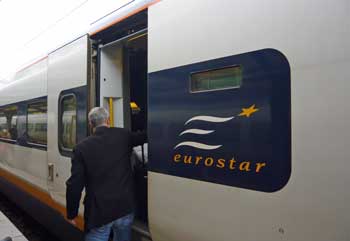 One of the most common (and expensive) mistakes people make in Europe is waiting too long to book train tickets, especially for high-demand routes like the Eurostar between London and Paris or Brussels.
Unlike in the U.S., where train prices are often fixed or only change slightly, most European train systems use airline-style pricing. That means fares start low when tickets are first released and then steadily increase as seats fill up.
For example, it’s very common to see a Eurostar ticket that costs around $75–$100 when booked a few months in advance jump to $200–$250 or more if you wait until the last minute. And it’s not just the price — the most convenient departure times also sell out first, leaving you with less ideal options.
This same pattern applies to most long-distance and high-speed trains across Europe, including routes in France, Italy, Spain, and Germany. The earlier you book, the more choices you’ll have and the less you’ll pay.
How far in advance should you book?
* For popular routes, aim to book:
* 2–4 months in advance for the best prices
At least a few weeks ahead to avoid the highest fares
Train tickets usually go on sale anywhere from 2 to 6 months before departure, depending on the country and rail operator.
Are last-minute tickets ever okay?
If your schedule is very flexible or you’re traveling short distances, you can sometimes get away with booking closer to your travel date. Regional trains, in particular, often have fixed prices.
But for major routes between big cities — especially anything involving high-speed trains — waiting almost always means paying more.
The bottom line
Book your train tickets as early as you reasonably can. It’s one of the easiest ways to save money in Europe, and it also gives you far more flexibility when planning your itinerary.
2. Staying in the wrong area
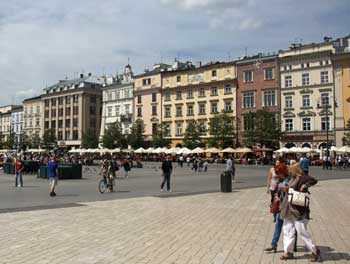 Where you stay in a European city can have a much bigger impact on your trip than most first-time visitors expect. In the U.S., it’s often normal to stay in a cheaper hotel a bit outside the city center and just drive or take a short ride into the main areas. In Europe, that strategy usually backfires.
Most major European cities are older, denser, and built around walkable historic centers. If you stay too far out, you’ll spend more time and money getting into the places you actually want to visit, and you may find yourself heading back earlier than planned because the commute feels like a hassle. That can easily eat into your sightseeing time and overall enjoyment.
Staying in a central neighborhood — or at least very close to a good metro or tram stop — makes everything easier. You can walk to restaurants, pop back to your hotel during the day if needed, and generally feel more immersed in the city instead of just visiting it.
It’s often worth paying a bit more for a better location, especially in expensive cities. A slightly smaller room in a central area is usually a much better experience than a larger, cheaper room far from the action.
3. Overpaying for airport transfers
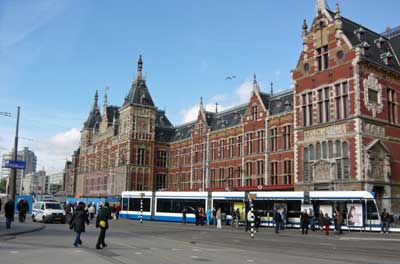 After a long flight, it’s tempting to just jump into a taxi or rideshare without thinking too much about it. In Europe, that’s often one of the quickest ways to overspend.
In many cities, taxis from the airport to the center can cost $50 to $70 or more, while trains or airport buses often cost under $10. And in some cases, public transport is actually faster because it avoids traffic.
Cities like London, Paris, Amsterdam, and Rome all have efficient train or metro connections from the airport directly into the city. These are usually easy to use, well-marked, and designed for travelers with luggage.
There are exceptions, of course. If you’re arriving very late at night, traveling with a group, or staying somewhere with poor public transport access, a taxi might make sense. But for most travelers arriving during the day, public transport is the better value and often the more efficient choice.
4. Waiting too long to book hotels
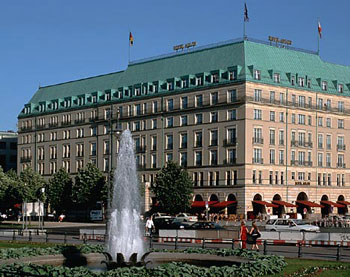 Just like train tickets, hotel prices in Europe often increase as availability goes down, especially in popular cities and during peak travel seasons.
If you wait too long to book, you’re not just paying more — you’re also left with fewer and less desirable options. The best-located hotels tend to sell out first, which means late bookers often end up choosing between expensive central hotels or cheaper places that are far from the areas they actually want to explore.
Booking early gives you more control over both price and location. It also allows you to compare neighborhoods and find a place that fits your itinerary, rather than settling for whatever is left.
Many booking platforms offer free cancellation, which makes it easier to lock something in early and adjust later if your plans change. Taking advantage of that flexibility can make a big difference, especially on longer trips with multiple stops.
5. Waiting too long to book flights
 Flights to and within Europe follow the same general pattern as trains and hotels: prices tend to rise as the departure date gets closer, and the best itineraries sell out first.
If you wait too long, you may end up paying significantly more for flights that are less convenient, with longer layovers or less ideal departure times. That can add unnecessary stress to your trip before it even begins.
For transatlantic flights, it’s often best to start looking several months in advance and book when you see a reasonable fare. For flights within Europe, booking a few weeks to a couple of months ahead usually gives you the best balance of price and flexibility.
Budget airlines can offer very low fares, but they often come with additional fees for things like luggage and seat selection. It’s worth checking the total cost carefully so you’re comparing like-for-like options.
6. Buying too many guided tours
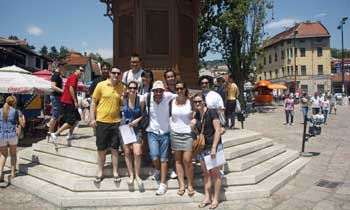 A lot of first-time visitors assume they need to book guided tours for most major sights in Europe, but in many cases that’s not necessary.
European cities are generally easy to explore on your own, with good signage, walkable layouts, and plenty of information available online. Booking too many tours can make your schedule feel rigid and rushed, and it can add up quickly in terms of cost.
That doesn’t mean tours are always a bad idea. They can be especially useful for places with a lot of history or context, like museums or specific landmarks. But instead of booking everything in advance, it’s often better to choose just one or two key experiences.
Tip-based walking tours are a great middle ground. They’re usually informative, flexible, and much cheaper than traditional guided tours, while still giving you a helpful introduction to a city.
7. Eating in tourist-zone restaurants
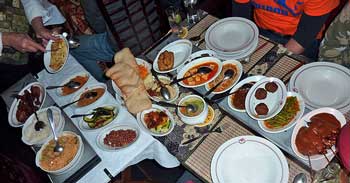 It’s very easy to end up eating in restaurants right next to major attractions, especially when you’re hungry and don’t want to wander too far. Unfortunately, those are often the places with the highest prices and the most average food.
Restaurants in heavily touristed areas know they have a constant stream of customers, so they don’t have to compete as much on quality or value. As a result, meals can be more expensive and less memorable than what you’d find just a short distance away.
In many cases, simply walking a few blocks away from the main tourist streets can lead to better food at lower prices. You’ll often find places that are more popular with locals, which is usually a good sign.
That doesn’t mean every restaurant in a tourist area is bad, and sometimes the convenience is worth it. But if you have the time and energy, exploring a bit beyond the main sights can make a noticeable difference in both quality and cost.
Final thoughts
Traveling in Europe can feel overwhelming when you’re planning your first trip, but most of the common mistakes are easy to avoid once you know what to look for. In fact, one of the biggest surprises for many visitors is how simple and enjoyable travel in Europe can be once you get the basics right.
If there’s one theme that comes up again and again, it’s this: book the important things early and keep your plans flexible once you’re there. Doing that alone will save you money, give you better options, and make your trip feel much smoother.
And beyond that, don’t overthink it. Europe is set up for travelers, and a lot of the best experiences come from just walking around, exploring different neighborhoods, and figuring things out as you go.
You might also be interested in
If you’re still in the planning stage, these related guides can help you refine your timing and overall strategy:
👉 Best Time to Visit Europe
👉 Best Places to Visit in Europe for First-Time Travelers