
5 Perfect First-Time Europe Itineraries (7 to 14 Days That Actually Work)
Planning your first trip to Europe can feel overwhelming. There are dozens of famous cities, hundreds of possible routes, and an endless number of opinions about what you “have to” see. After answering thousands of itinerary questions over the years and visiting most of Europe’s top destinations myself, I’ve found that the best first trips usually follow a few simple patterns.
In this guide, I’ll walk you through five Europe itineraries that actually work – routes that are logical, efficient, and realistic for a 7 to 14 day trip. These aren’t the only ways to plan your first visit, but they’re among the smoothest and most enjoyable ways to experience Europe without spending half your vacation in transit.
Each option below includes suggested pacing, transportation tips, and ideas for customizing the trip based on your interests and budget. Whether you prefer iconic capital cities, scenic alpine landscapes, Mediterranean charm, or even a cruise that lets you unpack once and see multiple countries, there’s a route here that makes sense.
If you’d rather watch the full breakdown, I also have a companion video where I walk through these five itineraries in detail. But below you’ll find an expanded written version with extra notes and planning tips.
1. London + Paris (7–8 Days)
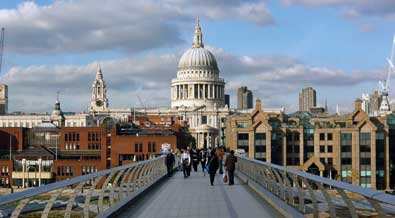 This is the classic first-time Europe itinerary for a reason. It combines two of the world’s most famous cities, both easy to navigate, well connected by train, and packed with recognizable sights. For most first-time visitors, this route delivers maximum highlights with minimal complexity.
Suggested Pacing
• 3–4 nights in London
• Morning Eurostar train to Paris (2 hours 20 minutes)
• 3–4 nights in Paris
Seven nights is comfortable. Eight nights allows a slightly more relaxed pace or a day trip from either city.
Arrival & Airports
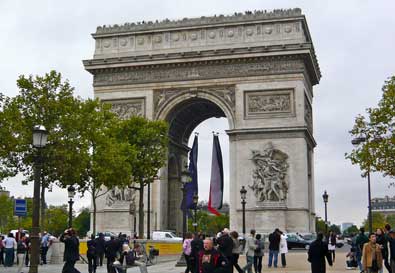 For most North American travelers, it’s easiest to:
• Fly into London Heathrow (LHR) — the largest airport with the most nonstop routes
• Alternatively, London Gatwick (LGW) works fine
• Avoid London Stansted or Luton unless you find a very specific deal — they are farther out
From Heathrow:
• Heathrow Express to Paddington (~15 minutes)
• Elizabeth Line (~30 minutes into central London)
• Or the Underground (cheapest but slower)
In Paris, aim to stay in the city proper rather than near the airport.
Paris has two main airports:
• Charles de Gaulle (CDG) – primary international airport
• Orly (ORY) – closer but more European flights
From CDG:
• RER B train into central Paris (~35 minutes)
• Taxi is reasonable compared to many US cities
⸻
London to Paris: Eurostar Details
The simplest and most efficient way to travel between the two cities is the Eurostar high-speed train.
• Departs from London St Pancras International
• Arrives at Paris Gare du Nord
• Travel time: ~2 hours 20 minutes
• Check-in required about 45–60 minutes before departure
This train is often faster than flying when you factor in airport transfers and security.
Seats are comfortable, luggage rules are generous, and you arrive directly in central Paris.
⸻
Why This Itinerary Works
• No flights required between cities
• No rental car needed
• Dense sightseeing in both cities
• Excellent public transportation
• English widely spoken in both places
It’s also psychologically easy. Starting in London reduces culture shock for English speakers, and by the time you reach Paris, navigating a slightly different language and culture feels manageable.
2. Rome – Florence – Venice (7–8 Days)
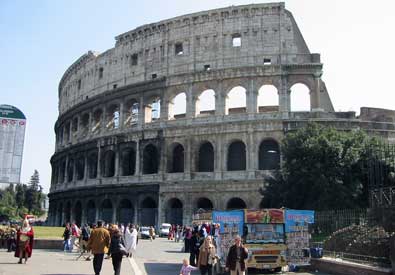 Often called Italy’s “Big Three,” this itinerary delivers ancient history, Renaissance art, and one of the most unique cities in the world, all connected by fast and efficient trains. It’s slightly more intense than London and Paris, but it’s still very manageable for a first trip.
Suggested Pacing
• 3 nights in Rome
• High-speed train to Florence (1 hour 30 minutes)
• 2 nights in Florence
• High-speed train to Venice (2 hours)
• 2 nights in Venice
Seven nights is efficient but doable. Eight nights gives you more breathing room in Rome or Florence.
⸻
Arrival & Airports
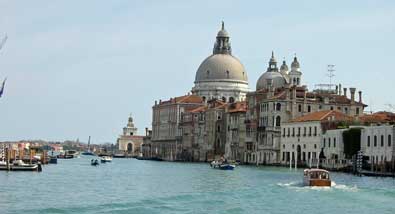 Most international flights arrive into:
• Rome Fiumicino Airport (FCO) – primary international airport
• Rome Ciampino (CIA) – mostly low-cost European carriers
From FCO:
• Leonardo Express train to Roma Termini (~30 minutes)
• Regional trains available for less money
• Taxi fares into the city center are fixed
It’s usually best to fly into Rome and out of Venice (or vice versa) rather than backtracking. Multi-city flights are often priced similarly to round-trip tickets.
⸻
Trains Between Cities
Italy’s high-speed trains (Trenitalia and Italo) make this route very easy.
Rome → Florence
• ~1 hour 30 minutes
• Frequent departures daily
• Arrives at Firenze Santa Maria Novella station (walkable to central hotels)
Florence → Venice
• ~2 hours
• Arrives at Venezia Santa Lucia station (on the main island)
No car is needed — and in fact, a car would be a burden in all three cities.
⸻
Venice Logistics (Important Detail)
Venice is crowded during midday, largely due to cruise passengers and day-trippers.
However:
• If you stay overnight on the main island, mornings and evenings are dramatically calmer.
• Venezia Santa Lucia station puts you directly into the historic center — no shuttle required.
• Vaporetto (water bus) passes are available for 24–72 hours.
Plan no more than two nights unless you simply love wandering and atmosphere. Venice is compact, and the main highlights can be covered efficiently.
⸻
Why This Itinerary Works
• Short train times between cities
• No flights required once you land
• Dense, world-famous attractions in each stop
• Walkable historic centers
• Excellent food throughout
Florence acts as a calm and rewarding midpoint between the intensity of Rome and the uniqueness of Venice. It also offers optional half-day trips to Pisa or the Tuscan countryside if you extend your stay.
This itinerary requires slightly more movement than London–Paris, but the transportation infrastructure in Italy makes it surprisingly smooth.
3. Paris + French Riviera + Italy (10–14 Days)
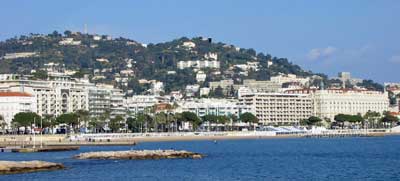 If you have more than a week and want more variety than simply moving between major capitals, this itinerary blends iconic cities with Mediterranean scenery and smaller coastal destinations. It combines Paris, the French Riviera, and Italy’s most famous highlights into a route that feels diverse without being chaotic.
Suggested Pacing
• 3–4 nights in Paris
• High-speed train to Nice (5–6 hours)
• 3 nights in Nice (French Riviera base)
• Optional day trips to Monaco or Cannes
• Flight or train to Venice
• 2 nights in Venice
• High-speed train to Florence (1–2 nights)
• High-speed train to Rome (2–3 nights)
With 10 nights, this works comfortably. With 12–14 nights, you can add extra time in Italy or expand your Riviera stay.
⸻
Paris to Nice
The easiest way to reach the Riviera is by high-speed train from Paris.
• Departs from Paris Gare de Lyon
• Arrives at Nice Ville station
• Travel time: ~5.5–6 hours
• Advance booking recommended during summer
The train is comfortable and scenic as you approach the Mediterranean. Flying is possible but often not faster once airport transfers are included.
⸻
Using Nice as a Base
Nice works exceptionally well as a hub because:
• The old town is compact and walkable
• Beaches are directly in town
• Regional trains are fast and inexpensive
Day Trips:
• Monaco – ~25 minutes by train
• Cannes – ~30 minutes by train
• Antibes and Villefranche-sur-Mer are also easy options
You can see a wide variety of Riviera highlights without changing hotels.
⸻
Nice to Italy
From Nice, you have two options:
Option 1: Fly to Venice
• Often the fastest option
• Saves a long travel day
Option 2: Scenic Train Route
• Longer but very scenic
• Requires connections
• Best if you prefer avoiding airports
Most travelers find a short flight more practical here.
⸻
Italy Segment
From Venice onward, the route mirrors the Italy itinerary above:
• Venice → Florence (~2 hours by train)
• Florence → Rome (~1.5 hours by train)
All stations are centrally located, so no additional transport logistics are complicated.
⸻
Why This Itinerary Works
• Combines capital cities with coastal relaxation
• Keeps travel legs logical and mostly direct
• Uses trains efficiently
• Limits hotel changes to meaningful stops
It offers a strong mix of culture, scenery, and food without feeling repetitive. Paris provides the grand European introduction, Nice delivers Mediterranean charm, and Italy finishes with concentrated history and art.
4. Paris + Switzerland + Munich + Salzburg (10–14 Days)
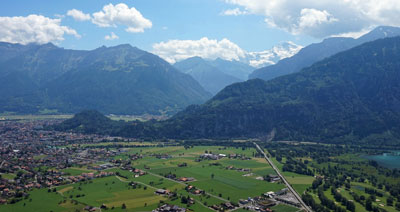 Not everyone wants to move from one major city to another for their entire first Europe trip. This itinerary blends iconic sights with some of the most beautiful landscapes in Europe, allowing for a slower and more scenic experience between cultural stops.
It’s ideal for travelers who want dramatic mountain views, charming historic centers, and a mix of France, Switzerland, Germany, and Austria in one logical route.
⸻
Suggested Pacing
• 3–4 nights in Paris
• Scenic train to Interlaken (or Lauterbrunnen area) – ~5–6 hours
• 2–3 nights in the Swiss Alps
• Train to Lucerne (optional 1–2 nights)
• Train to Munich (~4–5 hours from Lucerne)
• 2–3 nights in Munich
• Train to Salzburg (~1.5–2 hours)
• 2 nights in Salzburg
With 10 nights, you may skip Lucerne. With 12–14 nights, you can comfortably include it.
⸻
Paris to Switzerland
From Paris, take a high-speed train to:
• Interlaken Ost (common base)
• Or Lauterbrunnen (for dramatic valley scenery)
Travel time: approximately 5–6 hours with one connection in Basel.
Switzerland’s trains are punctual, comfortable, and extremely scenic — especially once you reach the alpine regions.
⸻
Swiss Alps Logistics
The Interlaken/Lauterbrunnen area is ideal because:
• No car is needed
• Mountain lifts and cogwheel trains connect major viewpoints
• Regional train passes can simplify ticketing
If adding Lucerne:
• Direct train from Interlaken (~2 hours)
• Compact and easy to explore
Switzerland is expensive compared to most of Europe, but even 2–3 nights delivers unforgettable scenery.
⸻
Switzerland to Munich
From Lucerne (or Zurich), take a direct or one-connection train to Munich.
• Travel time: ~4–5 hours
• Arrives at München Hauptbahnhof (central station)
Munich is one of Germany’s easiest cities for first-time visitors:
• Compact historic center
• Strong public transport
• English widely spoken
⸻
Munich to Salzburg
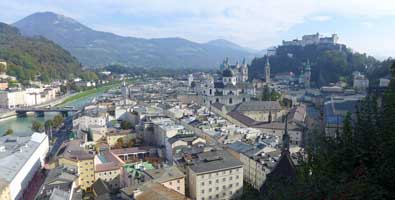 This is one of the simplest legs of the trip.
• Direct regional or fast train
• ~1.5–2 hours
• Arrives in central Salzburg
Salzburg’s Old Town is compact and walkable, with excellent train connections and a manageable size for a short stay.
⸻
Why This Itinerary Works
• Combines major capital (Paris) with alpine scenery
• Efficient train connections throughout
• No rental car required
• Mix of languages and cultures in one trip
• Slower pace in Switzerland balances busier cities
This route feels dramatically different from a city-only itinerary. You’ll experience iconic urban landmarks in Paris, then shift into mountain landscapes before finishing in Bavaria and Austria’s most charming historic center.
5. One-Way Mediterranean Cruise (10–14 Days)
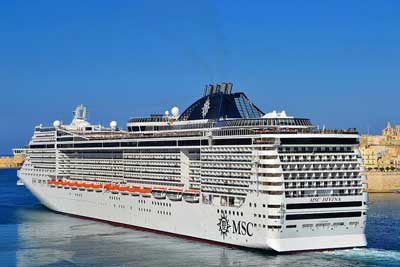 This is the itinerary most first-time visitors overlook — but it can be one of the easiest and most efficient ways to see multiple European highlights without constantly packing, unpacking, and changing hotels.
A one-way Mediterranean cruise allows you to unpack once and wake up in a new famous port almost every day, while your accommodation and meals are handled for you.
⸻
Suggested Structure
• 2–3 nights in Barcelona before the cruise
• 7–10 night Mediterranean cruise
• Disembark in Rome, Venice, or another major port city
• Optional 1–2 nights at the final stop before flying home
This typically creates a 10–14 day total trip depending on cruise length and pre/post stays.
⸻
Starting in Barcelona
Barcelona is one of the most common Mediterranean cruise departure ports.
Most travelers:
• Fly into Barcelona-El Prat Airport (BCN)
• Stay in the city center for 2–3 nights
• Transfer to the cruise terminal on embarkation day
Barcelona’s airport is well connected internationally, and taxis into the city are straightforward.
Spending a few days here also helps you adjust to the time zone before boarding the ship.
⸻
Typical Ports of Call
Depending on the cruise line and itinerary, stops may include:
• Marseille or Provence (France)
• Rome (via Civitavecchia port)
• Naples
• Florence/Pisa (via Livorno)
• Sicily
• Occasionally Venice or other Adriatic ports
Some cruises are round-trip, but one-way itineraries allow you to see more variety without repeating ports.
⸻
Port Logistics
Most Mediterranean ports are not directly in the historic city center.
For example:
• Rome requires transfer from Civitavecchia (~1 hour by train or bus)
• Florence and Pisa are accessed via Livorno port
• Naples docks close to the city center
Cruise lines offer organized shore excursions, or you can arrange your own transport independently.
⸻
Why This Itinerary Works
• Unpack once
• No train tickets to manage between cities
• Meals included
• Efficient sampling of multiple countries
• Good option for travelers with mobility concerns
The sightseeing is often more condensed than staying overnight in each city, but for first-time visitors who want to see a lot without complicated logistics, it can be ideal.
Cruises can also be surprisingly affordable when compared to paying separately for hotels, meals, and intercity transportation.
Customizing Any of These Itineraries
All five routes above are flexible.
You can:
• Add extra nights in your favorite city
• Fly open-jaw (into one city, home from another)
• Slow down the pace by reducing stops
• Adjust based on budget and seasonal timing
The key for a first Europe trip is not trying to see everything. Choose a route that makes geographic sense, limit hotel changes, and build in enough time to actually enjoy each stop.
For more detailed breakdowns and additional itinerary ideas, see my full guide to the best Europe itineraries as well as my video companion to this article.