
March is one of the most underrated months to visit Europe. The worst of winter is over, crowds are still low, and prices haven’t climbed into the spring and summer peak yet. You won’t find beach weather in most of Europe, but you will find plenty of sunny days, comfortable temperatures for sightseeing, and the chance to explore famous cities without shoulder-to-shoulder crowds.
This is also the month when Southern Europe really starts waking up for the season. Places like Rome, Lisbon, and Barcelona feel lively again, but not overwhelmed. Even cooler destinations — London, Paris, Amsterdam — are far more pleasant than they’ll be during the summer rush, and hotel rates stay surprisingly reasonable across most of the continent.
Below you’ll find my updated list of the best places to visit in Europe in March 2026 — from warmish islands like Tenerife to major cultural cities where you can enjoy museums, food markets, and historic neighborhoods without the usual lines or heat.
This article was last updated in November, 2025.
Europe's only March beach destination
Tenerife, Canary Islands, Spain
- March avg high: 71F/22C
- March avg low: 60F/16C
- March avg precip: 1.1″/2.8cm
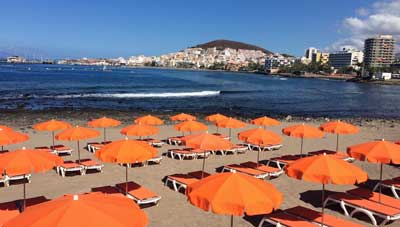 If you want reliably warm beach weather in Europe in March, Tenerife is easily your best bet. The Canary Islands sit far south — closer to Morocco than mainland Spain — so the climate here is mild all year, and March feels like early summer compared to the rest of Europe. It’s warm enough for the pool or beach most days, and the island has a huge range of resort towns depending on how lively or quiet you want things to be.
I spent almost a month in Tenerife and found it incredibly relaxing, especially in March when the crowds are mostly older northern Europeans escaping the cold. The beaches themselves aren’t as dramatic as some Mediterranean ones, but the overall atmosphere is very easygoing, the food is good and inexpensive, and the island is small enough that you can explore almost everything on day trips. Mount Teide towering over the island is a highlight, and the national park scenery is genuinely impressive.
Tenerife is also just one of several Canary Islands that offer similar weather — Gran Canaria, Lanzarote, and Fuerteventura all have the same March climate and tend to be slightly cheaper. If you’re looking for a warm, beach-friendly European getaway without long-haul flights, the Canaries are as dependable as it gets.
Hotel prices in March
- 3-star hotels from: US$88 per night for two people
- 4-star hotels from: US$123 per night for two people
- All-inclusive resorts from: US$255 per night for two people
Where to Go in Europe in March
Europe in March is all about timing — the weather is improving, crowds are still light, and prices haven’t climbed into spring or summer territory yet. You won’t get tropical heat, of course, but you can enjoy mild, pleasant days in the Mediterranean along with quieter city breaks in places like Rome, Paris, and Barcelona. Even the cooler destinations feel more relaxed this month, making March a great time for affordable European travel without the usual tourist rush.
Rome, Italy
- March avg high: 60F/16C
- March avg low: 42F/6C
- March avg precip: 2.6″/6.5cm
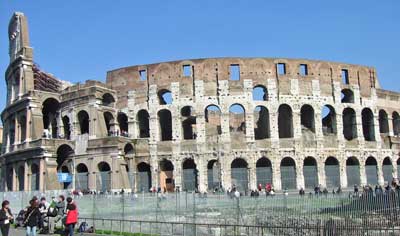 Rome is one of the world’s great year-round destinations, but March is an especially good time to visit. The winter chill is fading, café tables start returning to the piazzas, and you get the perfect combination of “pleasantly busy” instead of the shoulder-to-shoulder crowds you’ll see from May onward. You still need advance tickets for places like the Colosseum and the Vatican Museums, but moving around the city is far easier than in peak season.
I’ve visited Rome many times, and I always find that March hits the sweet spot: warm enough for long walks, cool enough that sightseeing doesn’t feel like a marathon, and lively in all the right ways. The city has so many iconic sights packed into a compact area that even first-timers quickly settle into a comfortable rhythm — morning sightseeing, a long lunch, and an afternoon of wandering cobblestone streets before dinner. Rome never gets boring, but it’s especially pleasant before the summer heat arrives.
Hotels are also more reasonably priced in March, especially in the classic neighborhoods on both sides of the river. You might still get a rainy day or two, but overall it’s one of the most dependable times of the year for a Rome trip — warm, atmospheric, and without the fatigue that comes with peak-season crowds. If you want the full Rome experience without the summer chaos, March is ideal.
Hotel prices in March
- Good 3-star hotels in March from US$95 for two people
- Good 4-star hotels in March from US$137 for two people
Paris, France
- March avg high: 55F/13C
- March avg low: 43F/6C
- March avg precip: 2.1″/5.3cm
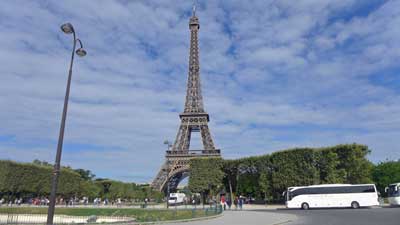 Paris in March feels like the city slowly waking up from winter — café terraces begin to fill again, the gardens start showing early signs of spring, and the crowds are still far lighter than what you’ll see from April onward. It’s cool, of course, but perfectly manageable with a light jacket, and you get that wonderful mix of crisp mornings and soft afternoon light that makes wandering around Paris so enjoyable.
I’ve been to Paris many times, and March is one of my favorite months for a relaxed visit. You can stroll through the Marais or along the Seine without the shoulder-to-shoulder crowds, museums are far easier to navigate, and iconic attractions like the Eiffel Tower and the Louvre feel more pleasant than at almost any other time of year. Even the hop-on hop-off bus and Seine River cruise — two of my personal favorites — are more comfortable before the high-season rush.
Hotel prices are also better than later in spring, and availability is much easier across the central neighborhoods. Paris will never be a “cheap” destination, but March gives you a noticeable break on both crowds and costs. If you want that classic Paris atmosphere with a bit more breathing room, this is a fantastic time to go.
Hotel prices in March
- Good 3-star hotels in March from $75 for two people
- Good 4-star hotels in March from $109 for two people
London, England
- March avg high: 51F/11C
- March avg low: 39F/4C
- March avg precip: 1.9″/4.8cm
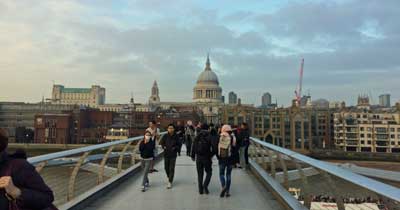 London isn’t warm in March, but it’s one of the best months for sightseeing without the heavy summer crowds. The weather is mild, the days are getting longer, and most indoor attractions — museums, galleries, pubs, markets — are in full swing. London is such an “indoor city” anyway that March fits it perfectly, and you’ll enjoy shorter lines almost everywhere you go.
I lived in London for six months, and honestly, March feels very similar to most of the year: gray skies, occasional drizzle, and a city that’s still incredibly fun regardless. You can hop between neighborhoods like Covent Garden, Soho, Shoreditch, and South Kensington without the peak-season masses, and iconic attractions like the Tower of London, Westminster Abbey, and the British Museum are far more enjoyable before Easter.
Hotel prices also dip a bit compared to April and May, and flights into Heathrow and Gatwick are usually reasonable. London is never a bargain, but March gives you more freedom and more space — and if you’re the kind of traveler who loves pub culture, museums, West End shows, and long walks along the Thames, this is an ideal month to visit.
Hotel prices in March
- Good 3-star hotels in March from US$76 for two people
- Good 4-star hotels in March from US$109 for two people
Barcelona, Spain
- March avg high: 61F/16C
- March avg low: 44F/7C
- March avg precip: 1.7″/4.3cm
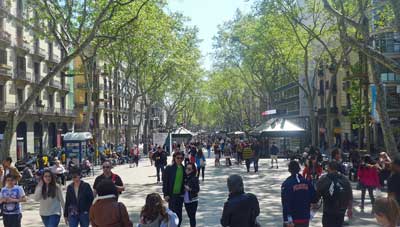 Barcelona starts shaking off winter in March, and while it’s not true beach weather yet, the city feels alive again. Daytime temperatures are pleasant for sightseeing, the Ramblas and Gothic Quarter aren’t yet jammed with summer crowds, and you can enjoy Gaudí’s big attractions — Sagrada Família, Park Güell, and Casa Batlló — with far fewer lines than you’d face later in the year.
Even though I prefer Barcelona in late spring or early fall, March still has that great mix of mild weather and energy without the heat or tourist chaos. You can wander the waterfront, explore the food stalls at La Boqueria, or spend an afternoon in El Born without constantly dodging tour groups. And the city’s restaurant scene is fantastic year-round, whether you want tapas bars, seafood along Barceloneta, or long late-night dinners.
Hotels are also far more affordable in March than in high season, especially around Eixample and Gràcia. If you want a lively European city with great food, iconic architecture, and enough warmth to enjoy long days outside, Barcelona is an easy and rewarding pick this time of year.
Hotel prices in March
- Good 3-star hotels in March from $124 for two people
- Good 4-star hotels in March from $170 for two people
Madrid, Spain
- March avg high: 60F/16C
- March avg low: 42F/6C
- March avg precip: 1.0″/2.5cm
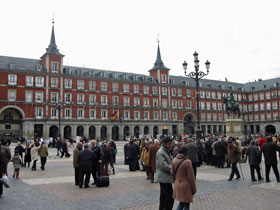 Madrid warms up nicely in March, and the city feels far more comfortable than during its hot summer months. This is a great time to explore the big museums — the Prado, Reina Sofía, and Thyssen — without the peak-season crowds, and the outdoor café scene along Gran Vía and Plaza Mayor starts to wake up again. The city has a very local, authentic feel in March before tourism really ramps up in April and May.
I’ve always enjoyed Madrid for its energy. It’s a place where you can wander for hours, ducking into markets like San Miguel or San Ildefonso, or spending an afternoon in Retiro Park when the first touches of spring start showing. It’s also a more relaxed sightseeing city than Barcelona, with wide boulevards, big plazas, and a rhythm that feels both cosmopolitan and laid-back.
Hotel prices in March are generally reasonable, and you’ll find excellent food everywhere — from old-school tapas bars to modern Michelin-starred restaurants. If you’re looking for a warm, culture-filled city break with great walkability and a strong local vibe, Madrid is a perfect choice in March.
Hotel prices in March
- Good 3-star hotels in March from $65 for two people
- Good 4-star hotels in March from $81 for two people
Lisbon, Portugal
- March avg high: 66F/19C
- March avg low: 48F/9C
- March avg precip: 1.9″/4.8cm
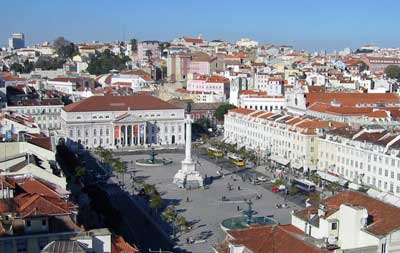 Lisbon is one of Europe’s best spring cities, and March is right when it starts to shine. The days are mild, the sun shows up far more often than in northern Europe, and you can comfortably spend hours walking the hills without overheating. It still feels like shoulder season, so you get most of the benefits of spring travel without the full crowds and prices of April and May.
I’ve long thought Lisbon is a bit underrated, partly because it sits “off to the side” of the usual Paris–Rome–London route. But that’s also what makes it so enjoyable. The tiled buildings, yellow trams, and miradouros (viewpoints) give the city a unique character, and it’s easy to mix major sights with simply wandering through neighborhoods like Alfama, Bairro Alto, and Chiado. Add in the day trip to Sintra and you’ve got a very full, very satisfying few days.
Hotel prices are still reasonable in March, especially compared to peak summer, and the restaurant scene is excellent value for a Western European capital. If you’re looking for a warmer, less hectic alternative to the “big three” European cities this time of year, Lisbon is a smart and very enjoyable choice.
Hotel prices in March
- Good 3-star hotels in March from $72 for two people
- Good 4-star hotels in March from $96 for two people
Florence, Italy
- March avg high: 59F/15C
- March avg low: 41F/5C
- March avg precip: 3.2″/8.0cm
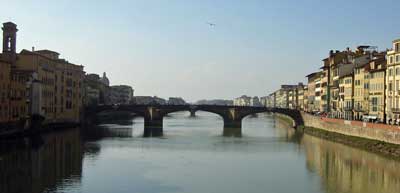 Florence in March is one of the best times to experience the city without the overwhelming tourist crowds that arrive from April onward. The weather is mild enough for long walks between the Duomo, the Ponte Vecchio, and the Uffizi, and you can actually enjoy the city’s narrow historic streets without feeling rushed or crowded out. It’s still early spring, so you may get a cool or drizzly day, but overall it’s an excellent month for sightseeing.
I’ve been to Florence several times over the years, and March consistently feels like the sweet spot. You can spend real time with the Renaissance masterpieces — Michelangelo’s David, Botticelli’s Birth of Venus — without the shoulder-to-shoulder museum experience Florence is known for later in the year. The city’s compact size also makes it perfect for leisurely days: an espresso in Piazza della Repubblica, a few hours in a gallery or two, then a long Tuscan lunch before wandering the riverfront.
Hotels are more affordable in March than in late spring or summer, especially around Santa Croce or the Oltrarno district. Florence will always be one of Europe’s great cultural capitals, and March gives you the chance to enjoy it at a gentler pace, with lower prices and more breathing room.
Hotel prices in March
- Good 3-star hotels in March from $98 for two people
- Good 4-star hotels in March from $112 for two people
Athens, Greece
- March avg high: 60F/16C
- March avg low: 44F/7C
- March avg precip: 1.6″/4.0cm
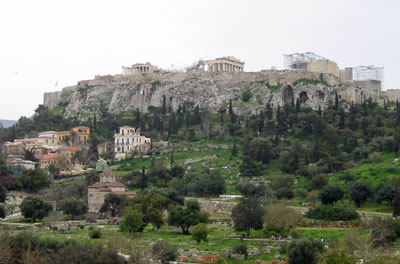 Athens in March is one of the most pleasant ways to experience the city — warm enough for comfortable sightseeing, cool enough that climbing up to the Acropolis doesn’t feel like a workout in the sun. Spring arrives early in Greece, so parks and hillsides start turning green again, and the city feels lively without the intense crowds of late spring and summer.
What I love about Athens in March is how easy it is to see the big sights without rushing. The Acropolis, Ancient Agora, and the Acropolis Museum are far more enjoyable when you’re not battling peak-season heat or tour groups. You can also explore neighborhoods like Plaka and Monastiraki at a slower pace, ducking into cafés, bakeries, and rooftop bars with great views of the Parthenon. Even a day trip to the Temple of Poseidon at Cape Sounion is much nicer before the summer surge.
Hotel prices are still well below their May–October highs, and the restaurant scene remains one of the best values in Europe for fresh, flavorful food. If you want a historic, culture-heavy trip with reliably pleasant weather, Athens is a top choice in March.
Hotel prices in March
- Good 3-star hotels in March from $71 for two people
- Good 4-star hotels in March from $85 for two people
Malaga, Spain
- March avg high: 64F/18C
- March avg low: 46F/8C
- March avg precip: 2.1″/5.3cm
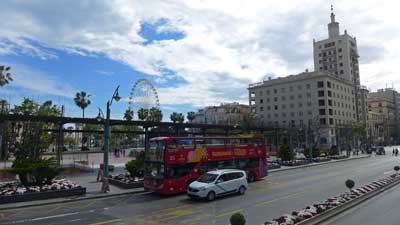 Málaga is one of the warmest mainland cities in Europe in March, making it an ideal early-spring getaway for anyone craving sun without flying all the way to the Canary Islands. Daytime temperatures are usually comfortable enough for long walks along the waterfront, exploring the old town, or grabbing an outdoor table for tapas. It’s not full beach weather yet, but it’s close — and far sunnier than most of Europe this time of year.
I’ve always found Málaga to be one of Spain’s most underrated cities. Most people treat it as the gateway to the Costa del Sol, but the city itself is extremely enjoyable, with excellent museums (including the Picasso Museum), a walkable historic center, and a relaxed seaside atmosphere. And once you’re here, it’s incredibly easy to do day trips to places like Ronda, Nerja, or even quick stops along the coast.
March hotel prices are still very reasonable, and restaurants and cafés haven’t yet switched into peak-season mode. If you want warm weather, affordable prices, and a base with lots to explore both inside and outside the city, Málaga is one of the best choices in Europe this month.
Hotel prices in March
- Good 3-star hotels in March from $58 for two people
- Good 4-star hotels in March from $92 for two people
Nice, France
- March avg high: 59F/15C
- March avg low: 46F/8C
- March avg precip: 2.4″/6.0cm
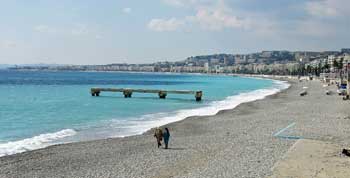 Nice is one of the most appealing places on the French Riviera in March, thanks to its mild temperatures, early spring sunshine, and a relaxed vibe before the summer crowds arrive. You can comfortably stroll the Promenade des Anglais, explore the Old Town, or grab a seaside table for a long lunch without the heat or the peak-season pressure. It’s not quite “swimming weather,” but it’s perfect for sightseeing and enjoying the coast.
I’ve always liked Nice in March because it gives you the Riviera feeling without the Riviera prices. The city is remarkably walkable, with colorful markets, elegant Belle Époque architecture, and easy viewpoints like Castle Hill. And if you want to explore more of the Côte d’Azur, places like Antibes, Cannes, Èze, and even Monaco are all quick and inexpensive train rides away — March makes those day trips far more enjoyable and crowd-free.
Hotel rates are still well below what they’ll be in April and May, and you get more flexibility with last-minute plans. If you want a warm, scenic, and easy European getaway with tons of variety and charm, Nice is a fantastic pick for March.
Hotel prices in March
- Good 3-star hotels in March from $70 for two people
- Good 4-star hotels in March from $85 for two people
Split, Croatia
- March avg high: 57F/14C
- March avg low: 46F/8C
- March avg precip: 2.5″/6.3cm
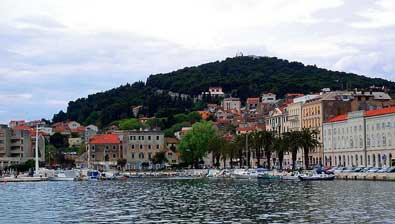 Split is a fascinating mix of ancient history and coastal scenery, and March is one of the most comfortable months to explore it without the crush of summer tourism. The weather is mild enough for long walks through Diocletian’s Palace — one of the most unique old towns in Europe — and the waterfront promenade starts to feel lively again as outdoor cafés reopen. It’s too early for proper beach days, but the sunshine and lighter crowds make sightseeing especially pleasant.
One of the things I’ve always liked about Split is how authentic it feels outside peak season. In March you’re sharing the city mostly with locals rather than tour groups, and that makes wandering the narrow passageways and hidden courtyards inside the palace walls much more enjoyable. You can take your time exploring the markets, the harbor, and Marjan Hill without battling the summer heat, and the whole Dalmatian Coast feels calm and welcoming.
Hotels are still in their low-season pricing, which gives you far better value than you’ll find later in spring. And while many of the ferries to the nearby islands operate on reduced schedules, day trips to places like Hvar or Šolta are still possible. If you want a scenic, historic European destination that feels “real” in March — and one that avoids the crowds and heat of high season — Split is an excellent choice.
Hotel prices in March
- Good 3-star hotels in March from $65 for two people
- Good 4-star hotels in March from $72 for two people
Valletta, Malta
- March avg high: 61F/16C
- March avg low: 50F/10C
- March avg precip: 1.9″/4.8cm
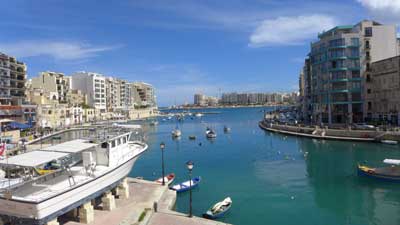 Valletta is one of Europe’s smallest capitals, but it packs in more atmosphere and history per square block than almost anywhere else. March is an excellent time to visit — warm enough for long days outdoors, but still early enough in the season that you can enjoy the city’s fortifications, cathedrals, and waterfront views without the summer crowds. It’s also one of the sunniest destinations in Europe this time of year, which is a huge plus if you’re chasing blue skies.
What makes Valletta especially appealing in March is how walkable and compact it is. You can wander from the Upper Barrakka Gardens to St. John’s Co-Cathedral to the harbor in minutes, stopping at little cafés and bakeries along the way. The architecture has this dramatic blend of Mediterranean, Baroque, and British influences, and the whole city is a UNESCO site — so even simple strolls feel like sightseeing. The ferries to Sliema and the Three Cities run frequently, making it easy to explore more without needing a rental car.
Hotel prices are still very reasonable before the Easter bump, and the weather is pleasant enough for outdoor dinners in the evenings. If you want a warm, beautiful, and incredibly unique European destination for March — one that’s easy, friendly, and full of history — Valletta is a fantastic choice.
Hotel prices in March
- Good 3-star hotels in March from $47 for two people
- Good 4-star hotels in March from $70 for two people
Reykjavik, Iceland
- March avg high: 38F/3C
- March avg low: 28F/-2C
- March avg precip: 3.2″/8.0cm
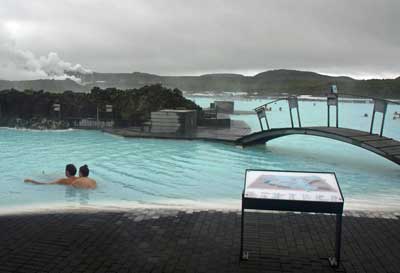 Reykjavik might not be “warm” in March, but it’s one of the best months of the year for Iceland if you want that perfect mix of winter scenery and longer daylight hours. March still feels like real winter — snow on the mountains, icy landscapes, and that crisp Arctic air — but with roughly 11 hours of daylight and far fewer visitors than in summer. It’s also one of your last good chances of the season to catch the Northern Lights.
The city itself is compact, walkable, and surprisingly cozy, with colorful houses, great cafés, geothermal pools, and a food scene that’s far better than people expect. Reykjavik makes a great base for day trips: the Golden Circle, the Blue Lagoon, glacier tours, and even ice caves are all running in March, and roads are usually manageable by this point in the season. I’ve been to Iceland during this shoulder period and it’s a really nice balance — dramatic scenery without the summer crowds and prices.
March hotel rates are noticeably lower than in peak season, which helps quite a bit because Iceland isn’t cheap. If you want a European trip in March that’s all about scenery, adventure, and the chance to see the aurora, Reykjavik is easily one of the top picks — especially before the big tourist wave returns in May.
Hotel prices in March
- Good 3-star hotels in March from $126 for two people
- Good 4-star hotels in March from $168 for two people
Interlaken, Switzerland
- March avg high: 50F/10C
- March avg low: 33F/1C
- March avg precip: 3.2″/8.0cm
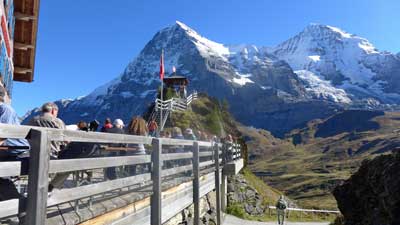 Interlaken in March is one of those “in-between” destinations — and that’s exactly why it can be such a fantastic deal. It’s the shoulder season between winter ski crowds and the big summer hiking rush, so the towns of Interlaken, Lauterbrunnen, and Grindelwald feel calmer and more local than usual. I’ve always said the Lauterbrunnen Valley is the most beautiful area in Europe, and in March you still get those dramatic cliffs and waterfalls, just without the peak-season congestion.
Weather can vary a lot — some years you’ll still see plenty of snow at higher elevations, while the valley floors start to thaw and feel almost springlike. Many cable cars and mountain restaurants begin reopening toward the end of the month, but even if a few lifts are undergoing maintenance, enough infrastructure is running that you can still explore the region easily. The views from places like Männlichen or Schilthorn don’t disappoint no matter the season.
Hotels are at some of their lowest prices of the year, which is rare for Switzerland. If you want to see one of Europe’s most iconic alpine areas while avoiding the crowds and saving money, March is an underrated and surprisingly peaceful time to go.
Hotel prices in March
- Good 3-star hotels in March from $152 for two people
- Good 4-star hotels in March from $217 for two people
[email protected] we are interested in San Sebastián Spain and Bordeaux, France in late March -early April? Is this a douable idea and where would we fly into and out.
Jill,
It’ll still be a little chilly in those cities in late March, but it should be pleasant enough to visit. If you are coming from somewhere other than Europe it’s probably best to fly into Paris and then take the high-speed train in about 2.5 hours to Bordeaux. From Bordeaux you can take a train and then a bus in a bit over 3 hours to reach San Sebastián. The closest large airport to San Sebastián is in Bilbao, which is about 70 minutes away by bus. From there you could fly back to Paris for a flight home. That’s probably the easiest way to do it. -Roger
Hi Roger,
Could you please let me know which places are good to visit in Europe in 2/3 week of March. like Portugal or Malta or canary islands,etc.
Regards,
Srinivas
Srinivas,
Actually, the whole article above was written to answer this question. I included the weather averages so you could see which places are warm and which places are still cold but worthwhile. The Canary Islands has warm weather all year and some people even sit on the beach there in December, but I find it to be kind of a boring place for cultural purposes because almost everyone there is just there to relax. Malta might be warm enough in March and at least it has enough permanent residents that it has interesting culture, particularly in the Valletta area and Sliema, which is just across the bay from Valletta.
And the southern coast of Portugal and Spain are getting warm that time of year as well. I’m not sure this helps, but I’m happy to answer specific questions if you have them. -Roger
I’d like to ask about the best places to visit in Europe (other than the UK) in the end of March and April which have many activities and the weather is warm or ok.
Thanks in advance!
Mohammed,
Actually, the whole article above is specifically written to answer your question. Spain, Portugal, and Italy all have reasonably nice weather in late March and early April, although none of them may be as warm as you hope. If you are interested in history, food, and culture I would go to Italy. But if you are more interested in hiking and relaxation and smaller crowds I would go to Spain and/or Portugal. I’m happy to help with more information if you have specific questions. -Roger
I am living in Warszawa and planning on a holiday from 24th March to 30 March with my daughter in Europe. Which place would you suggest is best. Do you think going to Italy – covering Rome, Venice and Florence would be good or is there any other place I can go. I wanted to take her to Greece – Athens and Santorini during this time but am not sure as hearing mixed reviews. Please advise. And thanks for your help.
Sumithra,
Athens and Santorini are very nice and definitely worthwhile, but if you haven’t yet been to Italy I would recommend going there first. Also, Athens is nice in March, but Santorini will be very quiet because the tourist season doesn’t really begin until mid April and it’s still quiet until June there.
With 6 days the fastest trip to Italy I would recommend would be to fly into Venice (or nearby Treviso) and spend about 24 hours there. Then take the two-hour train ride down to Florence and spend two nights there. Then take the 90-minute train ride down to Rome and spend your final 3 nights there, before flying back to Warsaw. With only 6 days you don’t really have much flexibility to do it any differently, so I hope that sounds okay. Let me know if you have any other questions. -Roger
To each is own but I would recommend staying longer in Florence than in Rome. Personally, aside fro the collisuem and ruins Rome is just okay… Florence is beautiful and much better imo. Just my two cents. Enjoy
Jermaine,
I actually agree with you. Rome is amazing, but it’s also overwhelming and so I think 3 days is a perfect stay for a first visit. But in Florence I think staying a week or even more would be lovely. I think the food is better as well. Thanks for the comments. -Roger
Hi
we are planning a 18 day trip to switzerland & italy. And would like to avoid snow and rain as my wife is pregnant.
We are not much interested in arts & museums. We like nature & scenic places.
We had following cities in mind:
Geneva
Montreux or chamonix
Milan
Como
Florence
Rome
Amalfi
Could you recommend places to visit in switzerland and italy for 15 days in last week of march & 1st week of april. We want to avoid cold or rainy weather. we are not much into arts & museums.
Mostly we would like to visit scenic places.
Rob,
It can rain any day of the year in Switzerland, but it’s a very modern and well organized country so it’s usually pretty easy to avoid getting too wet. To be honest, Geneva is a pretty dull city that happens to have a nice location on a lake. Montreux is similar and also with very nice views. I don’t think I would visit both of them, especially with so many other things to see in Switzerland. The most scenic and interesting city is Bern, which is also the capital. Interlaken and Lucerne are the most scenic places in Switzerland, and you probably won’t get snow in those places unless you go up into the mountains.
Milan is Italy’s second largest city but it’s not much of a tourist city (and it’s not very Italian). Unless you’ve already been to Venice I would recommend going there instead. The Lake Como area is indeed nice and it’s easy to reach from Milan on a local train in about an hour. Florence and Rome are the other two big tourist cities (along with Venice) and I would recommend 3 days in each of them.
The Amalfi Coast is a bit hard to reach and there isn’t much to do there aside from relax and enjoy the views. The easiest way to visit Amalfi is to take a train from Rome to Naples and then another local train from Naples to Sorrento, which is a lovely town on its own. Once in Sorrento you can take the local bus (leaving in front of the train station every hour) that goes along the Amalfi Coast including stops in Positano and Amalfi itself. It’s probably easiest to just stay in Sorrento and visit for the day. I’m not sure if you had any questions and I hope this helped. -Roger
Hi
we are looking to take a family trip to europe at the end of march. We mostly like to hike and are nervous that the weather won’t be so good. We are a family of 11 so we are looking for something on the lower end, budget wise- any suggetsions?
Elana,
One nice thing is that nowhere in the popular countries in Europe do they experience extreme weather with any regularity. Rain is spread fairly evenly throughout the year, and in the southern countries such as Spain, Portugal, Italy, and Greece, you won’t get any snow in March except at the highest elevations. Really my top recommendations for a March trip are all in the article above. And if you want to focus on hiking and outdoor activities it’s probably best to think about Spain and Portugal for the best March weather. Again, there are parts of the world where you might get heavy rain for a week straight in March, but in southern Europe you’d be extremely unlucky to get more than a couple of rainy days in a row. It will be a bit of a gamble, of course, but most likely it’ll be reasonably warm and mostly dry. Northern Spain has mountains and plenty of good hiking, but for the warmest and clearest weather you might look more to southern Spain and Portugal. I hope this helps. Let me know if you have any other questions. -Roger
Hi,
My friend and I are hoping to go to Rome for Spring Break this year, March 11-18. We are thinking that we would stay in Rome for four nights and Florence for two nights. I was hoping that you would have some suggestions for our trip as well as cheap places to go and means of travel since we are both in college and don’t have THAT much money. Thank you!
Amanda,
That sounds like an excellent Spring Break trip. You might even consider doing Rome in 3 nights then Florence in 2 nights and then 1 night in Venice. They are all less than two hours apart by train, and Venice might be the single most amazing place you’ll ever see in person. Venice is also small enough that 24 hours is a long enough visit.
By far the best way of getting around is by train, especially as the high-speed links between those cities are fast and cheap. Once you decide on a schedule it’s best to buy the train tickets ASAP for the best prices from the official Italy rail site. Even the train from Venice back to the Rome Airport won’t cost too much if you buy early.
I don’t often give specific itinerary suggestions for within cities as I feel that guidebooks and other websites do a much better job of that. I can highly recommend Rick Steves Italy guide, which is available in a book and also an ebook version. He does an excellent job of explaining the top sights and best strategies for saving money. You can also get advice from Lonelyplanet.com among others, but most of those guides tend to list everything so you are left to read it all and then sort out the highlights yourself.
The area around the Rome train station is convenient and pretty cheap for hostels and budget hotels, although a bit seedy at times if you get too far south. I hope this helps. If you have other specific questions I’ll be happy to try to answer them. -Roger
Looking for a fairly warm location with good accessibility for a wheelchair.
Paula,
I’m happy to try to help, but you might find more information on a website that discusses accessibility. In my experience I can say that most European cities do quite a good job with accessibility, although in some cities such as Paris, it’s most convenient to get around on the Metro, and not all stops have elevators. My first suggestions would be Barcelona and Madrid, since they have reasonably warm weather in March and are also mostly flat. Both of those cities are also compact enough that if you stay in a hotel in the central district you can see most things without needing public transportation.
I know quite a few European cities have special taxis and buses that can load in a wheelchair, but I don’t know enough about them to give advice myself. Sorry I couldn’t be of more help. -Roger
looking for a good price on an all inclusive from march 11-15
Serena,
There are only a few all-inclusive resorts on Tenerife and the other Canary Islands, but you could try there. And the mid March weather is okay for sunbathing for part of the day, though still a bit chilly for most people.
If you can put up with the flight time I’d recommend trying Punta Cana, Dominican Republic. The all-inclusive resort deals there are outstanding, which would make up for a pricier flight. The March weather there is also warm and sunny every day.
Your cheapest option close to Europe for all-inclusives with warm March weather would be Sharm el-Sheikh. The value is amazing, but that’s partly because some Europeans would prefer to avoid Egypt right now. Let me know if you have any other questions. -Roger