
January might not sound like the ideal time to visit Europe, but it can actually be one of the most rewarding. With far fewer crowds, dramatically lower hotel prices, and a different kind of charm in each city, winter travel in Europe has its own appeal. From mild southern capitals like Athens, Lisbon, and Barcelona to classic cultural cities like Paris and London, January offers the chance to experience Europe’s highlights without the usual chaos.
Of course, if you’re chasing real beach weather, Tenerife in Spain’s Canary Islands is your only reliable option. But even in cooler destinations, there’s something special about wandering nearly empty museums, slipping into cozy cafés, and exploring famous landmarks without lines. As long as you pack a warm coat and adjust your expectations, Europe in January can be affordable, atmospheric, and a lot more enjoyable than you might think.
Note: This article was last updated in August, 2025.
👉 Europe’s only reliable January beach destination
Tenerife, Canary Islands, Spain
- January avg high: 69°F/21°C
- January avg low: 59°F/15°C
- January avg precip: 1.3″/3.3cm
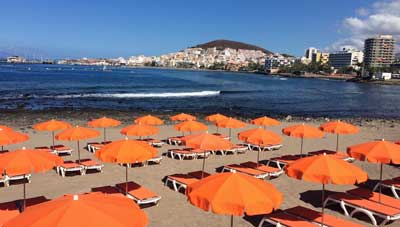 Tenerife is the one place in Europe where you can count on genuinely pleasant weather in January. Daytime highs average around 69°F (21°C), evenings are cool but rarely cold, and rain is infrequent. It’s not quite warm enough for long beach days, but compared to the freezing temperatures in the rest of Europe, it feels like spring. The island has excellent tourist infrastructure, English is widely spoken in the resort areas, and flights are frequent and cheap from across northern Europe.
I spent almost a month in Tenerife one winter, and while I’ll admit it can be a bit quiet and even boring at times, it’s a wonderful place to relax. The southwest corner of the island — especially around Los Cristianos and Playa de las Américas — has the sunniest weather and the most choices for hotels and restaurants. Even though it’s high season, prices are still reasonable by European standards, especially for longer stays. If you’re looking for a mild climate, great scenery, and a stress-free winter escape, Tenerife is your best bet in Europe for January.
Hotel prices in January
- 3-star hotels from: US$65 per night for two people
- 4-star hotels from: US$110 per night for two people
- All-inclusive hotels from: US$180 per night for two people
👉 Best Places to Visit in Europe in January
While most of Europe is cold in January, that doesn’t mean it should be avoided. In fact, this is one of the cheapest and quietest months of the year to explore some of the world’s most famous cities. Flights are often inexpensive, crowds are tiny compared to summer, and hotel prices are much lower — sometimes half the cost of peak season.
If you don’t mind bundling up, January can actually be a fantastic time to experience Europe’s top cultural highlights without the chaos of peak tourism. From southern cities that stay mild to northern capitals where cozy cafés make up for the chilly weather, these destinations are well worth considering.
Athens, Greece
- January avg high: 55°F/13°C
- January avg low: 41°F/5°C
- January avg precip: 2.27″/5.5cm
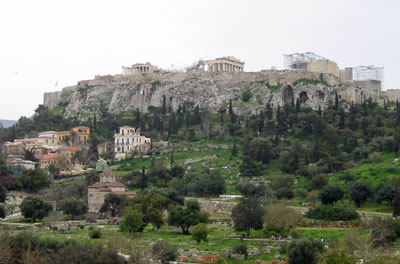 Athens is one of the few mainland European cities where January still feels fairly mild. Daytime highs often reach the upper 50s to low 60s °F (around 15–17°C), and while evenings are cooler, it’s still comfortable for sightseeing compared to the deep freeze across northern Europe. Rain is possible, but not usually disruptive, and the cooler season means you can explore the Acropolis, ancient ruins, and city streets without the oppressive summer heat.
The best part of January in Athens is the lack of crowds. Sites that are packed shoulder-to-shoulder in July feel almost serene in winter, and hotel rates are far lower as well. The food scene is another highlight — cozy tavernas serving grilled meats, seafood, and endless small plates at prices that are refreshingly cheap compared to Western Europe. For those wanting a cultural city break with milder weather and great value, Athens is one of Europe’s top picks in January.
Hotel prices in January
- 3-star hotels from: US$50 per night for two people
- 4-star hotels from: US$90 per night for two people
Lisbon, Portugal
- January avg high: 58°F/14°C
- January avg low: 47°F/8°C
- January avg precip: 3.8″/9.5cm
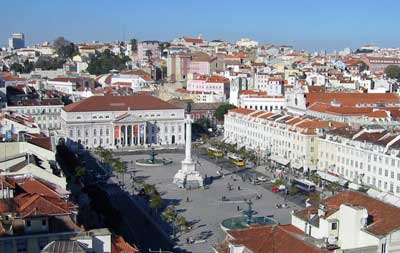 Lisbon is one of the mildest and sunniest capitals in Europe during January, making it a welcome break from the chill further north. Daytime highs often reach the upper 50s to low 60s °F (15–17°C), and while evenings can be cool, the winter sun and blue skies are a big draw. It’s still technically the rainy season, but showers are usually short-lived. Compared to the crowds of summer, Lisbon feels relaxed, and prices for flights and hotels are some of the lowest you’ll see all year.
The city itself is built for wandering — from its hilly streets lined with pastel-colored houses to historic tram rides and riverside promenades. In January, you can enjoy attractions like Belém Tower or the Jerónimos Monastery without long lines, and then warm up with a hearty seafood stew or a fresh custard tart from a bakery. Lisbon is also one of Europe’s best-value capitals for dining and nightlife, so even in the high season for budget travel, your money goes far.
Hotel prices in January
- 3-star hotels from: US$55 per night for two people
- 4-star hotels from: US$95 per night for two people
Barcelona, Spain
- January avg high: 56°F/13°C
- January avg low: 40°F/4°C
- January avg precip: 1.6″/4.0cm
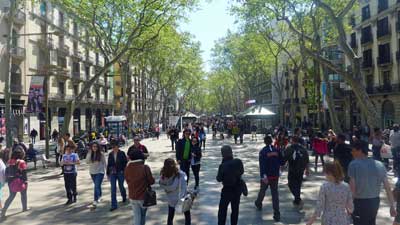 Barcelona may not be warm enough for a true beach holiday in January, but it’s one of the most enjoyable times of the year to explore the city. Highs usually reach the mid-50s °F (around 13°C), and while evenings are chilly, the days are often sunny and pleasant. Best of all, the tourist crowds that overwhelm the city in summer are gone, which makes visiting major attractions far easier and less expensive.
This is the time to enjoy Barcelona as a cultural city rather than a beach escape. You can admire Gaudí’s Sagrada Família and Park Güell without elbowing through tour groups, stroll down Las Ramblas at a relaxed pace, and duck into tapas bars that actually have empty tables. Hotels are far cheaper in January than in the warmer months, and dining remains good value compared to most of Western Europe. If you don’t mind a jacket and cooler evenings, Barcelona offers a perfect mix of sights, food, and affordability in January.
Hotel prices in January
- 3-star hotels from: US$60 per night for two people
- 4-star hotels from: US$100 per night for two people
Madrid, Spain
- January avg high: 49°F/9°C
- January avg low: 37°F/3°C
- January avg precip: 1.5″/3.8cm
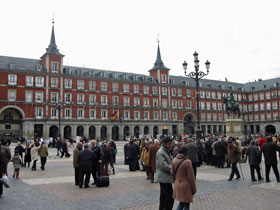 Madrid is cooler than Barcelona in January, with daytime highs averaging in the upper 40s to low 50s °F (around 9–12°C). Evenings are brisk, but days are often sunny, and rainfall is light. While it’s not a destination for outdoor lounging, it’s an excellent time to enjoy the city’s cultural highlights without the summer heat or crowds. With hotel prices dropping well below their spring and autumn peaks, January offers great value for travelers who don’t mind layering up.
This is one of Europe’s great museum cities, home to the Prado, the Reina Sofía, and the Thyssen-Bornemisza, which are far more pleasant to visit when they aren’t packed. Between sightseeing, Madrid’s café culture comes into its own in winter — warm churros with chocolate and lively tapas bars feel even cozier when it’s chilly outside. Flights into Madrid are plentiful, and combined with lower hotel rates, it makes for one of the most affordable capital-city getaways in Western Europe during January.
Hotel prices in January
- 3-star hotels from: US$55 per night for two people
- 4-star hotels from: US$95 per night for two people
Rome, Italy
- January avg high: 55°F/13°C
- January avg low: 39°F/4°C
- January avg precip: 3.1″/7.8cm
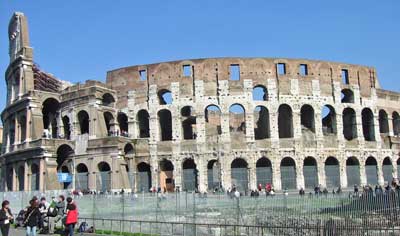 Rome is one of Europe’s great cities to visit in January. Daytime highs are usually in the low 50s °F (around 11°C), and while evenings are chilly, it’s much milder than most of northern Europe. More importantly, the crowds that overwhelm the city in summer are gone, so you can actually enjoy the Colosseum, Vatican Museums, and Roman Forum without feeling like you’re in a crush of tour groups. Hotel prices are far lower than in peak season, making January one of the cheapest times of year to stay in the city center.
That said, Rome has a certain chaotic energy that can be both thrilling and exhausting. Personally, I always look forward to visiting — but I’m usually ready to leave after three days. It’s hectic, noisy, and a little overwhelming compared to Florence or Venice, which feel more relaxing even in busy seasons. Still, for history and culture there’s nothing quite like Rome, and in January you get to experience it without the long lines and inflated prices. If you can handle a bit of chaos, it’s a rewarding stop on a winter trip to Italy.
Hotel prices in January
- 3-star hotels from: US$60 per night for two people
- 4-star hotels from: US$110 per night for two people
[oai_citation:0‡kayak.com](https://www.kayak.com/Cheap-Hotels-in-Europe.eu.htc.html?utm_source=chatgpt.com)
Florence, Italy
- January avg high: 50°F/10°C
- January avg low: 35°F/2°C
- January avg precip: 2.9″/7.3cm
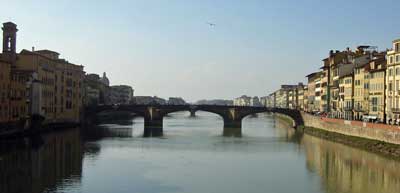 Florence in January is cooler than Rome, with daytime highs averaging around 50°F (10°C). Rain is possible, but crowds are tiny compared to spring and summer, which makes it far easier to enjoy the city’s art and architecture. Hotel rates are lower than in warmer months, and it’s one of the cheapest times to stay close to the historic center.
Personally, I love Florence in small doses — it feels calmer than Rome, and the compact historic center makes it easy to explore on foot. January isn’t the right time to add on a Cinque Terre side trip, since the seaside villages are quiet and often rainy this time of year, but a quick half-day to Pisa is still worthwhile. Seeing the Leaning Tower in person is more impressive than most expect, and it’s an easy train ride from Florence. Between world-class museums, cozy trattorias, and lighter crowds, Florence in January is a great way to experience Italy’s Renaissance capital without the peak-season hassle.
Hotel prices in January
- 3-star hotels from: US$55 per night for two people
- 4-star hotels from: US$100 per night for two people
Venice, Italy
- January avg high: 42°F/6°C
- January avg low: 30°F/-1°C
- January avg precip: 2.3″/5.8cm
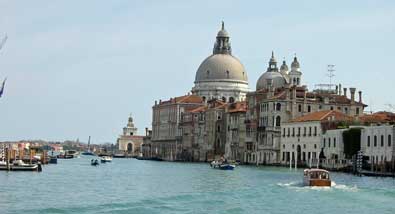 Venice in January is chilly and often misty, with highs around 45°F (7°C), but it has a unique charm this time of year. The canals are quiet, the alleys feel more mysterious, and you won’t be competing with the cruise-ship crowds that take over in warmer months. Hotels are cheaper than at almost any other time of year, so this is when you can afford to stay close to Piazza San Marco or along the Grand Canal without paying summer prices.
That said, Venice is one of those cities that I think is best enjoyed for a short stay — one or two days at most. The setting is breathtaking and unlike anywhere else in the world, but the food is generally disappointing compared to other Italian cities, and the heavy tourist presence tends to push prices up. Still, for a quick immersion in its canals, gondolas, and iconic architecture, January is a surprisingly good time to visit Venice before moving on to more rewarding culinary and cultural stops elsewhere in Italy.
Hotel prices in January
- 3-star hotels from: US$60 per night for two people
- 4-star hotels from: US$105 per night for two people
Paris, France
- January avg high: 45°F/7°C
- January avg low: 38°F/3°C
- January avg precip: 2.2″/5.5cm
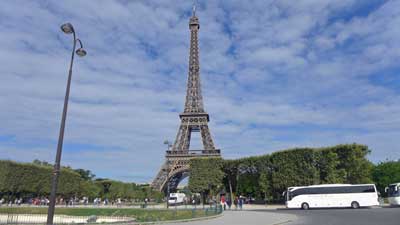 Paris in January is cold, with average highs around 45°F (7°C) and gray skies more common than not. Still, the city feels magical this time of year — café windows glowing in the evenings, the Eiffel Tower sparkling over nearly empty winter streets, and some of the world’s greatest museums with barely any lines. Hotels are far cheaper in January compared to spring and summer, which makes it one of the best times to stay in central Paris without blowing your budget.
I always look forward to visiting Paris, though I’ll admit it can feel hectic after a few days. The reward in January is that you get so much breathing room — wandering the Louvre or the Musée d’Orsay without crowds is a completely different experience. This isn’t the Paris of sunny picnics or long walks along the Seine, but rather cozy afternoons in cafés, bundled strolls through Montmartre, and evenings where you can actually find a table at a good restaurant. If you can handle the cold, Paris in January feels both more affordable and more authentically Parisian. If you want to do most of the famous attractions you should check out our review of the Paris Pass.
Hotel prices in January
- 3-star hotels from: US$70 per night for two people
- 4-star hotels from: US$125 per night for two people
London, England
- January avg high: 45°F/7°C
- January avg low: 36°F/2°C
- January avg precip: 2.1″/5.3cm
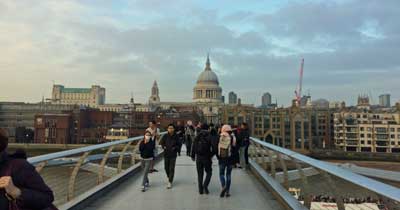 London in January is usually cold and damp, with average highs around 46°F (8°C) and frequent gray skies. That said, this is one of the cheapest months of the year to stay in central London, with hotel rates much lower than in spring and summer. Crowds are also light, making it easier to enjoy the city’s biggest attractions without feeling overwhelmed.
Having lived in London for six months, I can say this is a city best experienced through its indoor highlights — world-class museums (most of them free), cozy pubs, historic theaters, and covered markets. In January, you won’t have to fight long queues at the Tower of London or Westminster Abbey, and you can enjoy classics like the British Museum or National Gallery at your own pace. Walking just a few blocks away from the main tourist zones is also a great way to save money and find more authentic pubs and cafés. London in January isn’t about the weather — it’s about diving into culture, history, and everyday life at a more relaxed and affordable pace. You might even want to look at our London Pass review if you want to see the top attractions in a short time.
Hotel prices in January
- 3-star hotels from: US$75 per night for two people
- 4-star hotels from: US$130 per night for two people
Amsterdam, Netherlands
- January avg high: 41°F/5°C
- January avg low: 34°F/1°C
- January avg precip: 3.1″/7.8cm
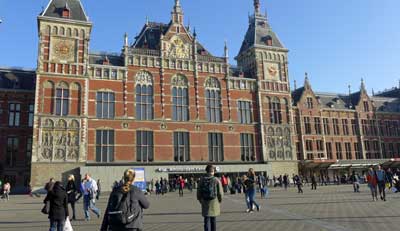 Amsterdam in January is gray, damp, and chilly, with highs around 43°F (6°C). But the truth is — that’s Amsterdam for most of the year. Snow is rare, and heavy rain isn’t common, so January isn’t all that different from March or November. The real upside is that hotels are much cheaper than in spring or summer, and tourist crowds are far smaller, which makes the city more affordable and enjoyable if you’re prepared for the weather.
Having lived in Amsterdam for three months, I think of it as an indoor city at heart. The compact layout means you’re never far from a cozy brown café, a canal-view pub, or one of its many world-class museums like the Rijksmuseum or Van Gogh Museum. The famous canals are still beautiful in the winter light, and riding trams around the city makes it easy to get between neighborhoods without long walks in the cold. January might not sound appealing at first, but since Amsterdam only has a couple of “nice weather” months each year anyway, this time of year is as good as most — and a lot cheaper.
Hotel prices in January
- 3-star hotels from: US$70 per night for two people
- 4-star hotels from: US$120 per night for two people
Istanbul, Turkey
- January avg high: 48°F/9°C
- January avg low: 37°F/3°C
- January avg precip: 3.4″/8.5cm
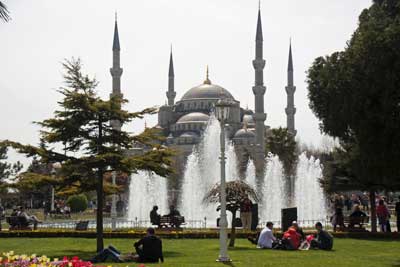 Many travelers picture Istanbul as a city with desert-like weather, but in reality it’s a coastal city much farther north than most people expect. In January, daytime highs average around 48°F (9°C), and evenings can feel quite cold, especially with the damp winds blowing in from the Bosphorus. Snow is possible but not common, and rain is frequent. Still, January can be a fascinating time to visit, with hotel prices among the lowest of the year and fewer crowds at the city’s most famous sights.
I’ll admit, before I first visited, I assumed Istanbul was closer to the desert — but it’s actually on the water, with a climate much cooler than many travelers realize. The good news is that most of the city’s highlights are indoors, from the stunning Hagia Sophia and Blue Mosque to the Topkapi Palace and the endless stalls of the Grand Bazaar. The food scene is another huge advantage: Turkish breakfasts, grilled kebabs, and endless cups of tea make it easy to warm up. While you’ll need a jacket, Istanbul in January offers an atmospheric, great-value experience in one of the world’s most remarkable cities.
Hotel prices in January
- 3-star hotels from: US$45 per night for two people
- 4-star hotels from: US$80 per night for two people
Europe in January: Final Thoughts
If your main goal in January is sunbathing, Europe isn’t where you’ll find it — Tenerife is really the only reliable beach option. But for culture, history, and value, this is one of the best times of year to explore Europe’s greatest cities. Crowds are a fraction of what they are in summer, hotels are often half the price, and even the busiest landmarks feel calm.
From southern cities like Athens, Lisbon, and Barcelona that stay relatively mild, to northern icons like Paris, London, and Amsterdam where cozy cafés and museums steal the show, January is an underrated time to enjoy Europe at its most affordable. As long as you pack a warm coat and don’t expect beach weather, you’ll find the continent welcoming, crowd-free, and surprisingly good value.
We are planning go for honey trip in January for 10 -12 days in Europe. Is it possible to cover beaches , mountain, and city to. Many thanks ….
Harrshit,
If you’ve got 10 to 12 days I’d recommend choosing 3 or 4 cities to visit in total. All of Europe’s beaches are quite cold in January, unless you fly to the Canary Islands. I’d probably focus on 2 or 3 cities and then maybe Switzerland if you want to visit the mountains. I’m happy to help if you have other questions. -Roger
I am going to Vienna, Strasbourg, Luzerne, Colmar FR and London in December with my husband. I have done Northern Italy a few times now. I dont know whether to go an extra month before December or after January 8th. The extra month I will be doing myself. Im 65 and have done months long trips on my own before. Im aching for snow..not to ski but to be amongst. Germany maybe? Not interested in a sunny place as we live on the coast in Australia. Im confused..Can you help please. I love walks…nature…photography..I found Pertisau the most beautiful place so far..Many thanks
Patrizia,
Of those two choices I’d recommend doing a month before December. The thing is, January and February are chilly and sometimes rainy months when most people stay inside and hunker down until spring. The days are also quite short (especially the farther north you go). November and December are much more active with shopping and Christmas markets and many celebrations. Even so, there are very few foreign tourists so hotels are cheap and attractions are not crowded.
As for snow, most of that part of Europe doesn’t get consistent snow at the lower elevations. In winter there might be a snowfall that lasts a few days on the ground, but most of the time it’s clear in those cities. In the mountains above Lucerne there will be snow (ski season starts mid December most years) and on the highest peaks near Interlaken there is snow year round. I’d suggest spending time in and near Salzburg, which is at the base of the Alps so snow should be nearby if not in the city.
Salzburg is also close to Munich and Bavaria and you’ll find a lot to see and do in that area. Have a scan of my article on where to go in Germany for some ideas, as several are in the south. Having lived in many hot climates myself, I totally understand about NOT needing a sunny place. Still, with short, cloudy days like that it can get a bit old, so I’d think about going south as well. France has fairly mild winters and some places in Spain are even nicer and somewhat sunny. One nice thing about traveling that time of the year is that you can get good deals on hotels even when you book a few days in advance because there are so few other tourists. In other words, you could wing it to some degree and see what you feel like doing when you are over there. I’ve done many trips like this and I’d be happy to help you with advice on it. -Roger
Hi Roger,
Planning to visit any one schengen country this January. 3 days including new year night. what is your recommendation (economical)? or should i skip the new year to save some money?
I am from Dubai.
Hasin,
Flying around New Year’s could be expensive because many people are flying home after Christmas, but flights in and out of Dubai are often cheap anyway so it’s worth a look. If you want a great city to visit in the Schengen Zone that isn’t too expensive I’d recommend Prague or Budapest. Both are really wonderful and should be lively on New Year’s Eve. Let me know if you have any other questions. -Roger
Hi Roger,
I am planning to go travel Europe this January most probably from 4th- 25th, Barcelona, Paris, Berlin, Brussels and perhaps Italy are on my list. Which activities can you recommend please? Your response will be highly appreciated. Thanks
Dan,
Those all look like good choices for cities to visit, although I might choose Amsterdam instead of Brussels because it’s far more interesting. My strong recommendation is to spend 3 nights in each city you visit, so it looks like you have time for 7 cities. The shortest worthwhile visit to Italy is 3 nights in Rome, 2 or 3 nights in Florence, and 1 night in Venice.
I’m happy to help people choose cities to visit and figure out the best way to get between them, but I don’t normally recommend activities in each city. This website has a page for every city you are considering and it lists the top attractions in each one. That should at least help you get started. Let me know if you have any other questions. -Roger
Hi Roger,
I am planning a Honeymoon trip to Europe in January 2019 – February 2019. It will be a 20 day trip. Can you please suggest a route covering most of the countries.
Regards
Anand,
If you have 20 days in Europe I would suggest choosing 6 or maybe 7 cities (not countries). In the winter you’ll probably want to stick mostly in the south, so I’d do Spain, France, and Italy for the most part. Make a list of the cities that interest you most and that should be the best way of getting your itinerary started. I’m happy to help more along the way. -Roger
Hi 🙂
Hoping you can help me. We have nearly 3 weeks in Europe from November 27 until December 18 when we leave.
I would like to touch a lot of different countries but still make sure we are there long enough to appreciate and see all they have to offer. We fly in and out of London. Thinking London to Armstradam – 2 nights, then Berlin 2 nights, Prague 2 nights, Venice 2 nights, Assisi 1 night, Rome 4 nights, Florence / Pisa 1 night, lucrence 1 night, Paris 3-4 nights, London 3-4 nights. Still playing around with itinerary but just thoughts. What do you think??? We are a family of 5 – 4 Adults and 1 Child but have travelled 2 x before for up to 7 weeks.
Any and all help :))
Thanks
Julie
Julie,
It’s good to hear that you are a group that is used to long trips. Still, I recommend trying to stay for 3 nights in most cities that you visit, with only a few exceptions such as Venice or Assisi, which are quite compact. The main issue is that from the time you check out of a hotel in one city until you check into a hotel in the next city will usually be 4 to 8 hours by the time you add everything up. In other words, for cities that are two hours apart by train it will still take you 4 or more hours from hotel to hotel. That time of the year there will only be sunlight from 8am or 9am until 4pm or so, especially in the northern cities. So even if you leave early you’ll only have a couple hours of daylight, plus you’ll be tired from all of the traveling. If you stay three nights that means that you have two full sightseeing days in each city, plus a bit of time on the day you arrive. Staying only two nights means you have one full day plus a bit of time, and in that extra day you can see most of the main highlights.
Amsterdam is packed with great sights, and Berlin is a very large city. I would save some of your other stops for a future trip and stay a bit longer in the main cities. You could do Rome in 3 nights, but I’d take at least 2 nights for Florence and hopefully 3 nights, especially if you want to do a half-day side trip to Pisa. I’ve never heard of lucrence, so maybe save that for a future trip as well. You can get between Florence and Rome in 76 minutes on the high-speed train, but if you do Assisi in between it will take over two hours from Florence to Assisi and more than two hours more from Assisi to Rome because it’s on a slower part of the track. I’m happy to help more if you have other questions. -Roger
hey roger. how are you. i want to go for europe trip in april.what will the best suggestable 2-3 place with good budget not on very higher side. iwill go from delhi,india.
want your suggestion.
Aditya,
I’m doing well and I hope you are too. If this is your first visit to Europe I actually recommend starting with these 5 great Europe cities before you look for cheaper ones. It’s true that Paris, London, Amsterdam, Venice, and Rome are more in the higher price category, but you can visit them cheaply and still have an amazing time. You can stay in hostels or 1-star or 2-star hotels that don’t have great locations, and still see all the best sights. And you can usually get a free breakfast at a hotel or hostel, and you can buy a cheap sandwich for lunch, so keeping food costs down isn’t too difficult.
But back to your actual question, you should have a scan of my article on the best value cities in Europe. If you’d rather go to 2 or 3 cities where even nicer hotels and restaurant meals are quite cheap, my top choices would be Prague, Krakow, Budapest, and even Berlin. I’m happy to help with more information if you need it. -Roger
Hi Roger,
Thank you for your suggestions. I am looking to go somewhere outside of Turkey after leaving Istanbul. I’ve actually seen several of the areas you mentioned on a previous trip, just not Istanbul. My thoughts were to go to Prague or Vienna or Budapest or ? Your thoughts?
Thanks : )
Pam,
All three of those options could be good, as they are each great and important cities with a lot to do and see. Regardless of where you go after Istanbul, you’ll have to fly because the recently-restored train service is still far too slow to reach any worthwhile destinations in under a full day. With 4 or 5 days I would choose 2 of those 3, and even then it will be rushing a bit. Since Vienna is between the other two, it makes sense to include it. Budapest is 2 hours 20 minutes by train from Vienna, while Prague is about 4 hours away. Still, I think Prague is the more interesting of the two, although Budapest is a bit cheaper.
If I were giving advice to a personal friend I would recommend flying int Vienna and spending 2 nights there, and then taking the train to Prague for 3 nights. Vienna is very much of a “cultural capital” in the sense that it has grand palaces and opera and classical music and a lot of history, with very tame nightlife. Prague, on the other hand, has gorgeous architecture and also classical music shows, but it’s also much more creative and it has some of Europe’s best nightlife. If you prefer the opera to unusual bars and funky clothing stores, spend more time in Vienna than Prague. Budapest is kind of a mix of the two, but still I’d recommend Vienna and Prague. Let me know if you have any other questions. -Roger
Hello,
I will be leaving my volunteer position Jan 25 and have added a week to travel before returning home. I am in Greece and am thinking of going to Istanbul for a few days but don’t know where to spend the last 4-5 days. Suggestions?
Thank you!
Pam,
Istanbul is a wonderful, huge, and busy city. I think 3 or maybe 4 days there is ideal, as you suggest. Assuming you want to explore more of Turkey, which I think is a great idea, you have many great choices. The first one I’d recommend is Cappadocia, which is home to those “fairy chimneys” that hopefully you’ll instantly recognize when you Google it. You can get there by bus from Istanbul and I’d recommend staying in the town of Goreme, which is the heart of the tourist scene there. It’s even more amazing in person than in photos, and it’s a fun place to explore and stay for 2 or 3 days. It’s quite cheap as well, although most of Turkey is quite cheap these days since tourism is well off from 2016.
My other favorite place in Turkey (I lived in Turkey for over a year not long ago) is the Mediterranean coastal city of Antalya, which you can reach by bus or plane from Istanbul or Cappadocia. Antalya has many tourist hotels along beaches north and south of the city center, but this time of year you’d just want to stay in the city center. It’s also cheap and fascinating. Similar to parts of Greece, there are historic ruins just out in the open all over the place. Antalya is a very pleasant and mostly traffic-free town center, and the nearby airport is busy with great fares so you can fly from there cheaply and easily.
The other main tourism centers are Bodrum, Izmir, and Selçuk, which is the small town next to the Ephesus city ruins (possibly Turkey’s number one sight). Have a look at those and let me know if you have any other questions I can help with. -Roger
Hi Roger
I am planning to have a 10 days trip starting from 25/01/2018. Please help me to select the cities I can add and love to have at least 3 countries. I would request you to give me a rough itinerary
Ramzi,
I actually wrote the post above to help people plan that much of their trip on their own. It will be chilly wherever you go and the cities on the list are the ones where the weather is mildest and it’s still enjoyable when it’s a bit cold. My advice is to think more in terms of cities than countries, and to plan on spending 3 nights in just about any city you visit. If you haven’t been to Europe yet I would definitely include Paris, as it really does live up to the hype. After all of that I hope you can find some cities that interest you and once you do that it will be pretty easy to string together a basic itinerary. If you have any questions after that I’m happy to help more. -Roger