
7 European Destinations With the Same Charm but Fewer Crowds
Overtourism has become a real issue in many parts of Europe. Some of the continent's most famous destinations are so crowded during the summer months that they can be difficult to enjoy. Long lines, packed streets, expensive hotels, and restaurants catering almost entirely to visitors can take some of the magic away.
Fortunately, there are often nearby alternatives that offer much of the same atmosphere, architecture, scenery, and culture, but with fewer crowds and lower prices.
These aren't necessarily hidden gems. Most are well known in their own countries and some are quite popular in their own right. The difference is that they tend to receive only a fraction of the visitors drawn to their more famous neighbors.
Here are seven European destinations that I think deserve a closer look.
1. Instead of Prague, Visit Cesky Krumlov
 Prague remains one of my favorite cities in Europe. The architecture is stunning, the historic center is compact and walkable, and there are enough attractions, restaurants, and museums to keep most visitors busy for days. The problem is that Prague’s popularity has become a bit of a victim of its own success.
Especially from May through September, the areas around Old Town Square and Charles Bridge can feel crowded from morning until late at night. I still recommend visiting Prague, but after a couple days I usually find myself wanting somewhere quieter.
That’s where Cesky Krumlov comes in.
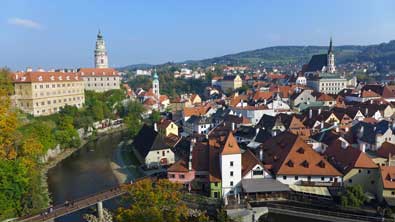
Located about two hours south of Prague, this small town of roughly 13,000 residents is Czechia’s second most popular tourist destination. Yet because it is so much smaller, it feels completely different.
The Vltava River loops dramatically around the historic center and the massive castle complex towers above the town. The narrow cobblestone streets, colorful buildings, and riverside views make it feel like a smaller and more intimate version of Prague.
One of the best things about Cesky Krumlov is that many visitors arrive as day-trippers. During the middle of summer afternoons it can certainly feel busy, but once those visitors leave, the atmosphere changes dramatically. The restaurants become quieter, the streets empty out, and the town becomes far easier to appreciate.
If what you love about Prague is the medieval architecture, old-world atmosphere, and walkable historic center, Cesky Krumlov delivers much of the same charm in a much smaller package.
Recommended hotel: Hotel OLDINN
2. Instead of Santorini, Visit Milos
 Santorini is arguably the most scenic island in Greece. The dramatic cliffs, whitewashed villages, blue-domed churches, and spectacular sunsets have made it famous around the world.
Unfortunately, millions of other people have noticed as well.
During summer it’s common to see four or five cruise ships anchored offshore at the same time. Hotel prices can be extremely high and the most famous viewpoints often become crowded long before sunset.
If what attracts you to Santorini is the scenery and classic Cycladic atmosphere, Milos is an excellent alternative.
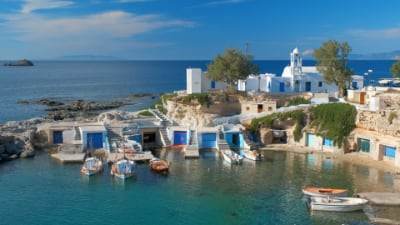
Milos receives only a small fraction of Santorini’s visitors, but it offers many of the same visual pleasures. Whitewashed villages cling to hillsides above the sea, fishing boats bob in picturesque harbors, and the water is every bit as beautiful as you’d expect from a Greek island.
The village of Klima is especially photogenic with its colorful boathouses lining the waterfront. Sarakiniko Beach looks more like the moon than a Mediterranean island thanks to its smooth white volcanic rock formations.
Another advantage is that Milos rewards exploration. During summer the prevailing winds generally blow from north to south, so many visitors head to the calmer beaches along the south coast. Some of the most attractive beaches are only accessible by boat, while others are easiest to reach by car.
Unlike Santorini, where many visitors rarely leave the main villages, Milos almost encourages you to rent a vehicle and explore the island at your own pace.
Recommended hotel: Atlantis Place Milos
3. Instead of Staying in Amsterdam, Stay in Haarlem
 Amsterdam is one of Europe’s most fascinating cities, but it has become increasingly expensive and crowded over the years.
Hotel prices during summer can be eye-watering, and the historic center often feels packed with visitors from all over the world.
Fortunately, there’s a wonderful alternative only minutes away.
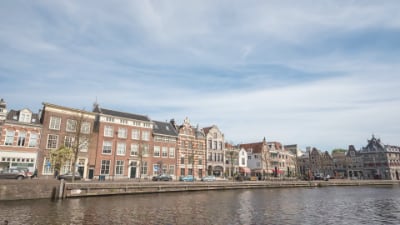
Haarlem is located about 16 minutes from Amsterdam by train and offers many of the same qualities visitors love about the Dutch capital. There are canals, historic buildings, outdoor cafés, excellent restaurants, and attractive public squares.
The difference is scale.
Haarlem feels like a real Dutch city first and a tourist destination second.
The Grote Markt is one of the most attractive squares in the Netherlands, anchored by the imposing St. Bavo Church. The surrounding streets are lined with shops, restaurants, and canals that would be major attractions in many other cities.
Because the train connection is so fast and frequent, Haarlem works perfectly as a base. You can spend all day exploring Amsterdam and then return to a quieter city where hotel prices are often dramatically lower.
Recommended hotel: Amrath Grand Haarlem
4. Instead of Bruges, Visit Ghent
 For many travelers, Bruges is one of the highlights of Belgium. Its canals, medieval architecture, and compact historic center make it easy to understand why.
The problem is that everyone seems to have gotten the same idea.
Bruges now receives millions of visitors each year and can feel crowded almost year-round.
Ghent offers a compelling alternative.
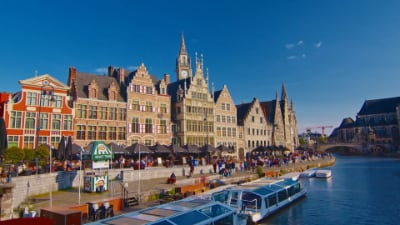
The historic center looks remarkably similar, with beautiful canals, historic buildings, church towers, and picturesque bridges. Yet somehow it feels much more local and relaxed.
Part of that comes from Ghent’s large university population. Unlike Bruges, which relies heavily on tourism, Ghent feels like a living city with a thriving local culture.
The city is also home to Gravensteen Castle, one of the best-preserved medieval castles in Europe, along with numerous churches, museums, and waterfront areas.
Visitors can easily take day trips to Bruges or Brussels and then return to a city that feels far less overwhelmed by tourism.
Recommended hotel: Hotel Gravensteen
5. Instead of Zurich, Visit Bern
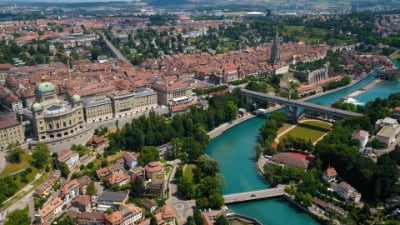 Most travelers pass through Zurich because it is Switzerland’s largest city and transportation hub.
There’s certainly nothing wrong with Zurich. The city is attractive, efficient, and beautifully situated beside a lake.
The problem is that it’s also one of Europe’s most expensive cities, and many visitors struggle to find enough attractions to justify an extended stay.
Bern offers a different experience.
Switzerland’s capital sits on a dramatic bend in the Aare River, creating some of the most beautiful urban scenery anywhere in Europe. The UNESCO-listed old town occupies a peninsula surrounded on three sides by water, making the city both visually striking and easy to explore.
Bern also feels more manageable than Zurich.
Many of the main attractions are within walking distance of each other, including the Einstein House, where Albert Einstein lived while developing some of his early theories, and the famous clock tower.
The city has all the advantages visitors associate with Switzerland, including beautiful architecture, excellent public transportation, and stunning scenery, but in a more relaxed and slightly less expensive setting.
Recommended hotel: Boutique Hotel Belle Epoque
6. Instead of Dubrovnik, Visit Split
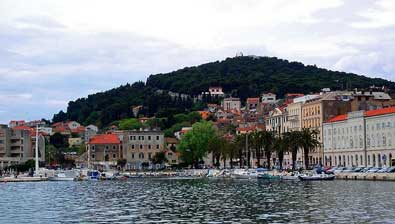 Dubrovnik is spectacular.
The historic center enclosed within the city walls is one of Europe’s most beautiful urban environments. The polished limestone streets and dramatic Adriatic setting are unforgettable.
Unfortunately, Dubrovnik’s popularity has become one of its biggest drawbacks.
Cruise ship passengers often flood the city during summer, filling the narrow streets and creating long lines at many attractions.
Split offers much of the same appeal while feeling considerably more livable.
The city’s historic core centers on Diocletian’s Palace, a remarkably preserved Roman complex that still serves as the heart of daily life. Restaurants, apartments, shops, and cafés occupy spaces that were originally built nearly 1,700 years ago.
Split also functions as one of Croatia’s most important transportation hubs. Ferries connect the city to many nearby islands, while trains and buses make exploring the rest of the country relatively easy.
The atmosphere feels more local, the prices are generally lower, and many visitors end up finding Split even more interesting than Dubrovnik.
Recommended hotel: Apartments Dujam
7. Instead of Barcelona, Visit Valencia
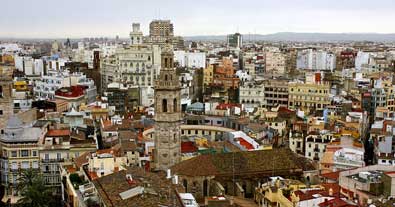 Barcelona remains one of Europe’s most exciting cities, but it has also become one of the most crowded.
The architecture is incredible, the beaches are attractive, and the restaurant scene is excellent. The challenge is that millions of visitors arrive every year looking for exactly those things.
Valencia offers a compelling alternative.
Like Barcelona, it sits directly on the Mediterranean and combines beaches, culture, food, and history in one destination. The difference is that Valencia feels much less overwhelmed by tourism.
The historic center is compact and attractive, while the enormous Turia Gardens provide one of the most pleasant urban parks in Europe.
Valencia is also home to the striking City of Arts and Sciences, a futuristic complex that has become one of Spain’s most recognizable modern landmarks.
Food lovers have another reason to visit. Valencia is widely recognized as the birthplace of paella, and many restaurants continue to serve traditional versions of the dish.
For travelers seeking Mediterranean weather, excellent food, beaches, and attractive architecture without Barcelona’s intensity, Valencia is one of the best alternatives in Europe.
Recommended hotel: Hotel San Lorenzo
Final Thoughts
The most famous destination isn’t always the most enjoyable one.
Places like Prague, Santorini, Amsterdam, and Barcelona are famous for good reasons and I still recommend visiting them. But if you’ve already been there, or if you’re simply looking for a more relaxed experience, these alternatives can offer much of the same charm with fewer crowds and often significantly lower prices.
I’d love to hear your suggestions as well. Which famous European destination would you replace, and what alternative would you recommend instead?