
The Safest Caribbean Islands for Tourists in 2026 (Based on Real Travel Patterns)
The Caribbean is one of the most popular vacation regions in the world, but safety is understandably one of the first questions travelers ask when planning a trip. Headlines and government advisories can make the entire region sound risky, yet the reality on the ground is far more nuanced. Many Caribbean islands are not only safe, but have long track records of welcoming millions of tourists every year with very few serious incidents.
In this article, we focus on the Caribbean islands that are consistently considered the safest for visitors, based on crime patterns, tourism infrastructure, and real-world travel behavior rather than fear-driven headlines. These are places where tourism is a major part of the economy, security is taken seriously, and visitors generally stay in well-developed areas designed for travelers.
It’s also important to understand that “safe” in the Caribbean usually means safe for tourists, not that every neighborhood or city area is identical. Most incidents that affect safety statistics occur far from resort zones and popular visitor areas. Travelers who stay in established accommodations, use licensed transportation, and follow basic common-sense precautions experience these destinations as relaxed and trouble-free.
Below, we’ll break down the Caribbean islands that stand out for safety, explain why they rank well, and note the types of trips they’re best suited for — whether that’s all-inclusive resorts, small boutique hotels, or independent exploring.
Video of the article below
These 7 Caribbean islands are safe, and surprisingly affordable
Barbados
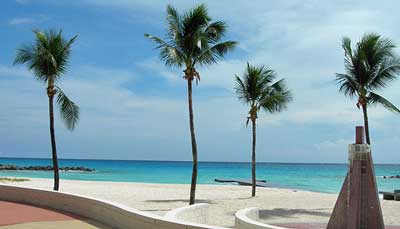 Barbados is one of the easiest Caribbean islands to recommend if safety is a top priority. It has a Level 1 U.S. State Department rating, a long-established tourism industry, and excellent infrastructure, so it generally feels polished, organized, and easy to navigate. For visitors, that translates into well-maintained roads, regulated transportation, and tourist areas that are comfortable to explore.
Many travelers associate Barbados with luxury, particularly along the famous Platinum Coast on the island’s west side, where beachfront villas and high-end resorts dominate. While that reputation isn’t wrong, it also leads many people to assume the entire island is out of reach price-wise — which isn’t actually the case.
Barbados has a good selection of smaller, well-run hotels at more reasonable prices, especially if you’re willing to stay a short walk from the beach rather than directly on it. A solid example is the OceanBlue Hotel, where rooms start at around $175 per night in high season and the property maintains a strong 8.8 review average. It’s close to the coast, near a sandy beach, and located in an area that feels safe, relaxed, and very tourist-friendly.
Overall, Barbados is a great example of how a Caribbean island can feel upscale and secure without actually being expensive — as long as you know where to look. For first-time Caribbean visitors, solo travelers, and anyone who values a calm, well-organized environment, it consistently ranks among the safest and most comfortable choices in the region.
Curaçao
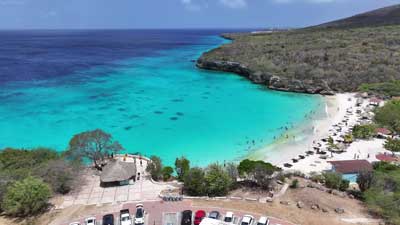 Curaçao is a good example of why traveler safety and crime statistics don’t always tell the same story. The island has a Level 1 U.S. State Department rating, a very stable political environment, and a long track record as a popular tourist destination. For visitors staying in established areas, Curaçao generally feels calm, organized, and easy to navigate.
One advantage Curaçao has over many Caribbean islands is its location outside the main hurricane belt, which makes it appealing for late summer and fall travel as well. From a safety perspective, the most common issues visitors encounter aren’t violent crime, but petty theft — things like leaving valuables unattended on the beach or visible inside parked cars. Travelers who use hotel safes, keep belongings secured, and exercise basic awareness rarely run into problems.
Curaçao also surprises many visitors with how affordable it can be. While there are upscale beachfront resorts, the island has a strong selection of mid-range and budget-friendly accommodations, particularly near Willemstad and other popular tourist zones. One good example is the Majestic City Suites & Beach Hotel, where rooms start at around $107 per night in high season and the property maintains an 8.6 review average. It also offers multiple on-site dining options, which adds convenience and reduces the need to travel far at night.
With its colorful architecture, excellent beaches, strong snorkeling, and walkable tourist areas, Curaçao offers a relaxed and comfortable experience for visitors. Combined with its stability, weather advantages, and solid value options, it consistently ranks among the safest and most practical Caribbean islands for travelers.
Saint Kitts and Nevis
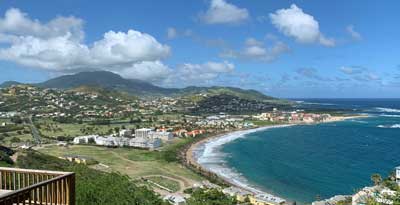 St. Kitts and Nevis is one of the calmest and most relaxed destinations in the Caribbean, which is a big reason it ranks so well for traveler safety. The country has a Level 1 U.S. State Department rating, a very small population, and relatively little large-scale development. For visitors, that translates into fewer crowds, fewer busy nightlife areas, and a generally quiet atmosphere.
One thing many travelers notice right away is how uncrowded St. Kitts feels. There’s no large city, no sprawling resort zone, and very little random foot traffic compared to busier Caribbean islands. That lower density plays a big role in the overall sense of safety, especially in the evenings. Visitors who stay in well-reviewed hotels and spend most of their time in nearby tourist areas tend to find the experience calm and predictable.
Because the island is small and hotel options are limited, where you stay matters more here than on larger islands. Booking a good property and enjoying evenings on-site or in nearby restaurant areas is usually the smartest approach. A strong example is the Royal St. Kitts Hotel, where high-season rates are around $187 per night and the hotel maintains an excellent 9.0 review average. The property has pools, restaurants, and easy access to the popular Frigate Bay area, so guests don’t need to travel far at night.
Overall, St. Kitts and Nevis feels controlled, upscale, and low-key. For travelers whose idea of a great Caribbean trip involves quiet beaches, uncrowded surroundings, and a high level of comfort, it’s one of the safest and most stress-free choices in the region.
Antigua and Barbuda
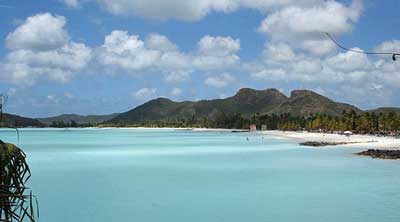 Antigua and Barbuda is another Caribbean destination that consistently ranks well for traveler safety. It has a Level 1 U.S. State Department rating and a tourism-focused economy, which means visitor areas are well established and designed around international travelers. For most visitors, Antigua feels straightforward and easy to navigate, especially when staying in resort or beach-oriented areas.
Antigua does have a reputation for being an expensive island, and in many cases that reputation is deserved. Boutique hotels and higher-end resorts can be pricey, particularly during the winter high season. However, Antigua is also a good example of how choosing the right type of accommodation can significantly change both the cost and the overall safety profile of a trip.
On islands that already rank well for safety, large all-inclusive resorts are often among the safest ways to travel. These properties are designed so guests can arrive at the airport, take a hotel shuttle, and stay on-site for the entire vacation if they choose. Access points are controlled, security staff are visible, and non-guests are actively kept out, which creates a very contained and predictable environment.
In Antigua, one of the best-value options is the Jolly Beach Antigua Resort, where high-season all-inclusive rates start around $273 per night. It’s a large resort with roughly 400 rooms, generally solid reviews, and a long beachfront setting. For travelers who want a safe, self-contained resort experience without Antigua’s usual luxury-level pricing, this property offers unusually good value.
While Antigua isn’t a cheap island overall, it’s a place where making one smart hotel choice can result in a vacation that feels both secure and surprisingly affordable.
St. Maarten
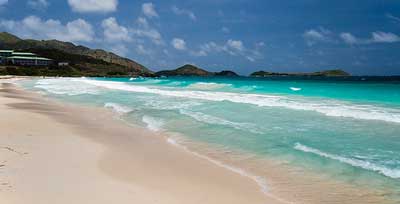 St. Maarten has long been one of the Caribbean’s most established tourism hubs, and it generally ranks well for visitor safety. The island has a Level 1 U.S. State Department rating and a very mature tourism infrastructure, with well-developed beach areas, resorts, and restaurant districts that cater heavily to international travelers.
For most visitors, St. Maarten feels safe and comfortable in the main tourist zones. As with many popular islands, the biggest safety considerations tend to be location and timing rather than day-to-day activity. Avoiding late-night party areas — particularly beach clubs and nightlife zones — is usually the simplest way to minimize risk. Outside of those areas, the island is easy to get around and well suited to relaxed sightseeing and dining.
Although St. Maarten isn’t typically thought of as a budget destination, there are still some good-value options if you look beyond the most famous beachfront resorts. One example is the L’Esperance Hotel, a small boutique-style property set in the hills with a pool and quick access to nearby beaches. High-season rates are around $152 per night, and the hotel maintains a solid 8.4 review average.
St. Maarten is a good example of how choosing the right neighborhood and accommodation can make a destination feel both safe and reasonably priced, even on an island that’s known for its nightlife and higher-end resorts.
Saint Lucia
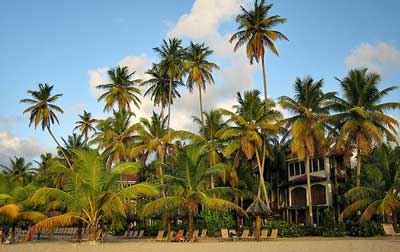 St. Lucia is widely considered one of the most beautiful islands in the Caribbean, and it also consistently ranks well for traveler safety. The island has a Level 1 U.S. State Department rating and a tourism industry that’s polished and well established. For visitors, that usually translates into clearly defined tourist areas, reliable transportation, and accommodations that take guest security seriously.
What many travelers don’t realize is that St. Lucia has a surprisingly large number of all-inclusive resorts — roughly two dozen in total. While some of the best-known properties, particularly the Sandals resorts, can be very expensive, many others are smaller, quieter, and far more reasonably priced. These resorts tend to attract travelers who value calm, comfort, and simplicity rather than nightlife or crowds.
From a safety standpoint, the all-inclusive model works especially well in St. Lucia. Guests typically arrive via hotel transfer, settle into the resort, and spend most of their time on-site or on organized excursions. This minimizes the need to navigate unfamiliar areas independently and creates a very controlled, low-stress travel experience.
A strong value option is the Coco Palm Beach Resort, where all-inclusive rates start around $357 per night. It’s a smaller property with fewer than 90 rooms, an excellent 8.6 review average, and a much more relaxed atmosphere than the large mega-resorts found in some other Caribbean destinations.
For travelers who want natural beauty, a slower pace, and a straightforward resort-based vacation, St. Lucia offers a combination of comfort, calm, and safety that’s hard to beat.
Punta Cana
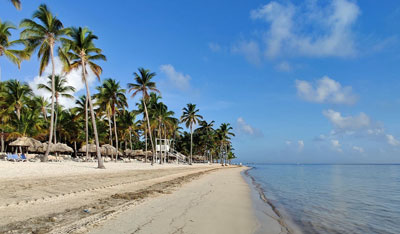 Punta Cana is a slightly different case than the other destinations on this list, and it’s worth explaining why. The Dominican Republic has a Level 2 U.S. State Department advisory, which advises travelers to exercise increased caution. However, the experience in Punta Cana itself is very different from what that headline might suggest.
Punta Cana is almost entirely built around large, purpose-designed resort complexes. These areas are heavily patrolled by the Dominican Republic’s dedicated tourist police, and security presence is very visible both outside and inside the resorts. Within the resort zones, access points are controlled, guests wear wristbands, and staff are actively focused on keeping non-guests out.
Inside the resorts, everything is designed to be self-contained. Dining, beaches, pools, entertainment, and activities all take place within the resort perimeter, and on-site transportation is usually provided. In practical terms, this means that for most visitors, the only time they leave the secure resort environment is on the hotel shuttle to and from the airport.
A good example of this setup is the Barceló Bávaro Beach – Adults Only, where all-inclusive rates are around $276 per night and the property maintains an 8.6 review average. It’s part of a massive, well-secured complex with multiple resorts, restaurants, pools, and long stretches of beach, all contained within a single controlled area.
While the Dominican Republic doesn’t have a Level 1 rating overall, Punta Cana stands out as one of the most controlled and closely monitored tourist environments in the Caribbean. For travelers who want maximum convenience, predictable comfort, and the highest possible level of resort-based security, this is one of the safest ways to do a Caribbean vacation.
Final Thoughts: Staying Safe in the Caribbean
The most important takeaway is that staying safe in the Caribbean has far more to do with where you stay and how you travel than with the island itself. Choosing well-reviewed hotels, staying in established tourist areas, and using licensed transportation or resort transfers goes a long way toward minimizing risk — even in destinations that don’t carry a Level 1 rating overall.
The islands in this guide stand out because they combine stable governments, tourism-focused infrastructure, and travel patterns that keep visitors in well-maintained, well-policed areas. In many cases, especially on smaller islands or at all-inclusive resorts, travelers can enjoy a relaxed and predictable vacation without needing to navigate unfamiliar neighborhoods or nightlife scenes.
It’s also worth noting that government travel advisories reflect national conditions, not the day-to-day experience inside major resort zones or popular tourist districts. Millions of people visit the Caribbean every year without incident, particularly those who plan thoughtfully and prioritize reputable accommodations.
For travelers who value peace of mind as much as sunshine, these destinations offer a strong balance of safety, comfort, and value — making them excellent choices for a Caribbean vacation in 2026 and beyond.