
How long should you stay in each European city? 3 Nights, and here is why
Planning your first big trip to Europe can be a daunting task because there is just so much to see and wanting to maximize your itinerary is wise. I get a lot of questions from those planning trips, especially on my articles about the best first-time Europe itineraries and my Eurail Pass review. Many questions are something like, “Can I see these 9 cities on a 15-day trip?” My answer is always, it's possible but you'd regret it and here is why…
After getting so many questions like that I decided it would save time to put together all the reasons why 3 days and nights in each European stop is almost always the best choice for those wanting to cram in as much as possible. So below you'll see why I highly recommend that, and hopefully it will help you plan your own trip.
This article was last updated in August, 2022.
Three nights in each city is the magic number for those wanting to see as much as possible
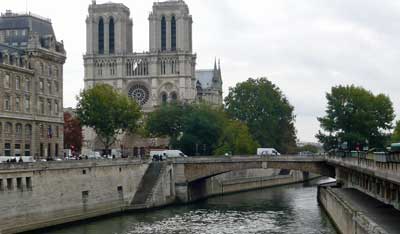 However tempting it might be to spend only two nights in each city or even to only spend one night in a city before moving on, please consider the points below and take them into account. And when I mention “3 nights” for me it means the same as “3 days.” In the end the days and nights will add up to the same, and the most important thing is having two full sightseeing days where you wake up and go to sleep in that same city.
A transit day is never a good sightseeing day
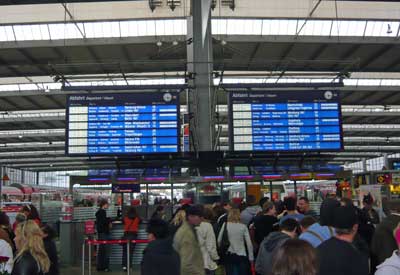 The short version of this whole topic is that it’s very difficult to get much meaningful sightseeing in on the day you arrive, and the later you arrive the harder it is. Even if you are all checked into your hotel at 2pm, the sightseeing day is almost over and at most you’ll have the time to see one meaningful sight before things start closing up.
Early in your trip you might be able to climb off a train, get to your hotel to check in and put your bags down, and then have a late lunch before visiting a museum and a shopping district. But after a week or so of that pace, you will be mentally exhausted when you arrive in a new city and nothing will sound better than relaxing and maybe having a glass of wine or a beer.
Train and bus travel is tiring, and flying is worse
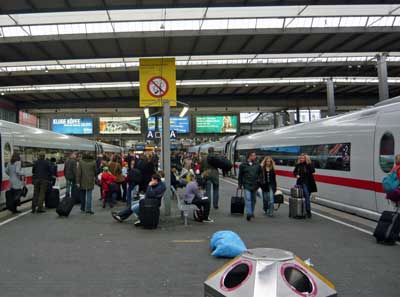 It’s an odd phenomenon that seems to be shared by almost everyone that we feel tired and somewhat worn out after a long car, bus, or train ride. Personally I don’t feel as tired if I’m the driver on a 5-hour car journey, but if I’m the passenger I’m always strangely tired when I arrive.
I think it might be partly that the scenery along the way is a bit overwhelming for our brains and that humans aren’t adapted to go at high speeds for long periods of time. You might be a rare person who isn’t affected by this, but for most of us we won’t be ready to run to the first famous sight the moment after we put our bag down in our hotel room.
One other thing to keep in mind is that the trains in the former Eastern Europe countries are still quite slow and there is almost no high-speed service. I recommend the best cheap Europe itinerary for 2 to 3 weeks and it includes 4 or 5 stops. Unfortunately, the trains between cities like Prague, Krakow, and Budapest are slow and they can take 9 or 10 hours. After a ride like that, it will take some effort to just get to your next hotel, much less do any real sightseeing.
Arriving midday or in the afternoon is disorienting
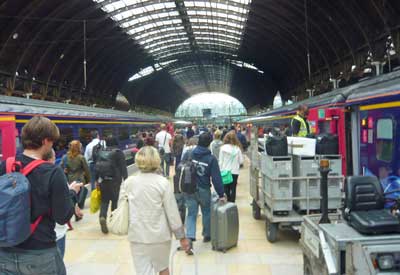 As a veteran of about 12 total years on trips and probably close to 1,000 hotel rooms, I’ve noticed that I feel at least a little off until my first full day in a city where I’ve actually woken up there. Nearly all of my travel companions have reported the same thing, and for some people it’s worse.
If you are staying in the heart of the sightseeing district you might have better chances of feeling okay, and that is another good reason to put ‘location’ at the top of your hotel criteria, above having a big room or a beautiful lobby. However, if you arrive at your hotel and then have to take a bus or metro or even a taxi or Uber, you will feel almost dizzy because you won’t know where anything is or which direction you have just come from.
The bottom line is that if you arrive in a city after noon that day you’ll probably feel disoriented and your time is probably better spent learning your way around rather than going immediately to the top attraction on your list like the Louvre or the Statue of Liberty.
Packing and checking out and into hotels and hostels takes precious time
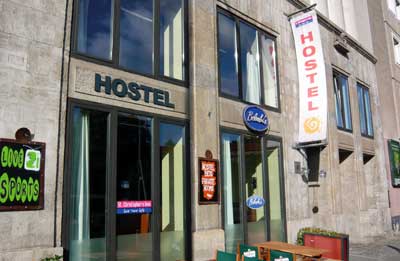 You may only have a 2 or 3-hour train ride ahead if you if you are lucky, but the time from when you start getting ready to leave one hotel until you are fully checked into your next hotel is still going to be a lot longer than that.
Let’s say your 2-hour train ride is at 9:30am and your hotel is only a 10-minute walk from the station. You still have to be ready to check out of the hotel at 9am in case there are people in front of you, so you have to start packing and organizing your stuff at least 15 minutes before that, and that’s if you are a well organized light packer. Now in the era of Airbnbs, checking out is often automated and you just have to walk out the door, but a huge majority of Airbnbs are still outside of the city center or train station district, so you’ll have more travel time to get even to the train station, much less the airport.
That train might pull into its station in the next city at 11:30am, but then you have to find your way to your hotel by foot, public transport, or taxi. Even if you arrive at noon there is a good chance that the desk clerk will point to a sign that says “Check-in time is 3pm.” They will watch your bags if you go out and come back, but then you have another chore once you return and your room is finally ready.
With two full sightseeing days you can see all the top highlights on your list
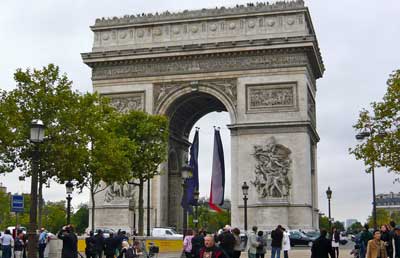 As hurried as you may feel on your travel days, the full days you have in any given city will feel surprisingly long if you plan ahead. Assuming your priority is to see the highlights of multiple cities on a trip like this, you can easily enjoy 3 or 4 major sights each day, and you’ll still have a bit of time for some shopping, strolling, and a nice dinner and some nightlife.
The key is to plan your days in advance so you can most efficiently visit all of the sights at the top of your list. By the end of that second full day you will have hit at least your top 7 or 8 items, and you’ll feel like you know your way around pretty well at that point. Maybe you’ll decide to return someday to explore the rest of the things on your list, but even if you don’t you’ll still have experienced all of the things you cared most about.
For a common example of this you can check out our guide to the best Paris Pass itineraries for 2 or 3 days. Paris is loaded with amazing and famous sights, and still you can easily see the best 6 to 8 of them in two full days, as long as you plan ahead.
A 4th day is wise in some larger cities that are packed with sights
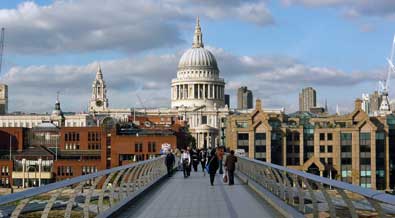 Three days is enough time to hit the highlights of most cities in Europe and elsewhere, but if you have a spare day it can come in handy in the largest and most interesting cities such as London and Paris. For example, the Palace at Versailles is a half-day or longer trip from Paris, and Windsor Castle is also a half-day trip from central London. If you want to visit those iconic sights it’s hard to include them if you only have two full sightseeing days.
Rome is another city that is large and packed with top-shelf sights, but they are all close enough together that two full sightseeing days should be enough. You’ll want to spend at least half a day at the Vatican, but you can see Ancient Rome, the Colosseum, the Spanish Steps, and the Trevi Fountain in the other half of that same (exhausting) day.
The more time you have to spend in each city obviously the more you can see, but for those who want to see as many cities as possible on one trip, three days and nights is usually the magic number.
Changing cities too often can ruin a trip
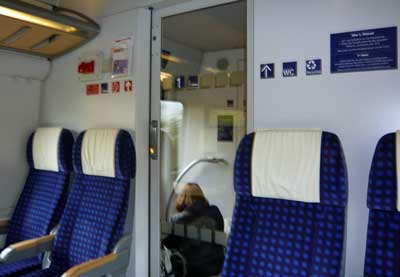 For all of the reasons discussed above, the time from when you start to check out of a hotel in one city until the time you are at your hotel in the next city is usually a minimum of 5 hours or so. And when you finally get in your room in the next city you will probably feel somewhat tired and fairly disoriented. When you add it all up you’ll be spending most of the middle of a day until you are ready to enjoy your new surroundings.
If you change cities every other day you will not only limit your sightseeing time, but you’ll also start getting burned out quickly. Checking in and out of hotels and studying train schedules is draining, and if you do it too often you’ll almost certainly regret it. Seeing 4 cities in 8 days is exhausting, and seeing 8 cities in 16 days is much worse.
On longer trips of more than two weeks it can also be wise to add in a rest stop
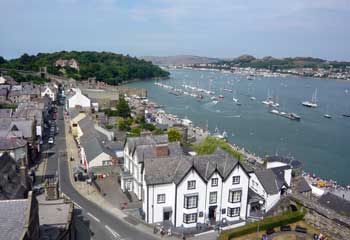 Even if you follow this advice and you change cities exactly every three days, you’ll be seeing a lot and spending every third day traveling, and you’ll also start getting tired and burned out after only two weeks or so. If you are lucky enough to be on the road for three or more weeks, you’ll thank yourself if you build in at least once ‘rest stop’ where you stay in a place without an abundance of sights, and plan on just relaxing and doing laundry or shopping and such.
Europe is filled with wonderful smaller towns with affordable hotels where you can chill out and regain your desire to push on again. Smaller beach towns are often perfect for this, even in the colder months when room rates can be shockingly low. In my experience, it’s best to choose a smaller town whether it’s on the beach or not, rather than just saying you are going to hang out two extra days in, say, London. There would be too much temptation to see more sights in London, while if you were in a small mountain or beach town you’ll be able to properly relax and also save some money.
Hi Roger, my wife and I are planning a trip to Europe leaving Minneapolis on Sept 5th or 6th and returning on Sept 21st. We want to start in Amsterdam, then visit Paris, Venice, Florence and Rome maybe another city like Nice if you think it will work. Can you recommend how many days in each location, what type of transportation we should use from city to city, what time we should be traveling each travel day and where best to stay in each city for us.
Thanks
Keith,
That sounds like a great trip. If you’ve got 15 days then you’d have time to visit all 5 of those cities and Nice should be pretty good in early September. I’d do three nights in Amsterdam then a train to Paris for 3 or 4 nights and then a train to Nice for probably two nights. Then a train to Venice for two nights (it’s small and crowded) and then a train to Florence for 2 or 3 nights (possibly including a day trip to Cinque Terre) and then a train to Rome for 3 or 4 nights. Those train tickets can be fairly cheap if you buy them well in advance. In fact, I’d buy them soon if possible.
I strongly prefer trains departing around 10 AM in the morning because that gives you plenty of time for breakfast and to get to the train station, and then when you arrive in the next city around 1 to 2 PM your room will probably be ready soon. The trains with the best times get booked first so you might save money by going a bit earlier or later, but I’d try to go in the morning hopefully no earlier than 8 AM.
As for where to stay in each city that is complicated and depends on budget. I have a bunch of articles about that on this site and even some Youtube videos. It’s just too much to summarize. I hope this helps and let me know if you have any other questions. -Roger